











You’ve conquered your home market. Whether your company is based in São Paulo or Mexico City, you’ve optimized your product-market fit, built a loyal user base, and mastered the local payment landscape. You know exactly when to offer Pix or Mercado Pago to drive conversions.
Now, you’re looking outward. The goal is no longer just regional dominance; it is global expansion.
But selling software to a customer in Texas or Berlin is fundamentally different from selling to one in Rio. Many high-growth LATAM founders fall into the trap of thinking global expansion is just a matter of translating their website and adding a few currency options.
The reality is that once you cross borders, the rules of the game change completely. You’re suddenly exposed to a tangled web of tax liabilities, cross-border payment friction, and operational headaches that can stifle your growth before it truly begins.
Here are the four hidden barriers to global scaling — and how savvy founders overcome them.
1. The Tax Trap
A common misconception among international founders is that your company’s location determines your tax liability. You might think, “”I’m a Brazilian company, so I follow Brazilian tax laws.”
Unfortunately, in the world of digital product sales, tax obligations are almost always determined by where your customer sits, not where you sit.
Here are just a few common examples:
- The U.S. Nexus Maze: If you sell to buyers in the United States, you aren’t just dealing with “U.S. tax.” You’re dealing with economic nexus. Nexus is the legal status you reach when you cross a specific sales threshold. Once you sell more than that amount in a jurisdiction, you must start collecting its local taxes. With rules varying by state, county, and even city, you could find yourself owing taxes in 50+ different jurisdictions, each with its own rates and filing requirements.
- The VAT Burden: Similarly, if you sell into the European Union, you are responsible for collecting Value-Added Tax (VAT) at the buyer’s country’s rate (e.g., 19% in Germany vs. 20% in France) and remitting it to the local authorities.
For a growing finance team, international taxes can be an administrative nightmare. You’re forced to either hire expensive international tax firms or risk audits and fines that could cripple your business.
2. The Payments Paradox
When you expanded within LATAM, you learned that offering trusted local methods like Pix or Mercado Pago was critical to regional success. It’s tempting to apply the same logic globally by adding every possible payment option to your checkout page.
However, an overwhelming number of payment methods can actually backfire, creating decision fatigue or even confusion — which lowers conversion rates.
A customer in the Netherlands wants to see iDEAL. A customer in the U.S. expects credit cards or Apple Pay. If a German buyer lands on your checkout and sees a list of irrelevant options intended for Brazilian or American shoppers, trust erodes immediately.
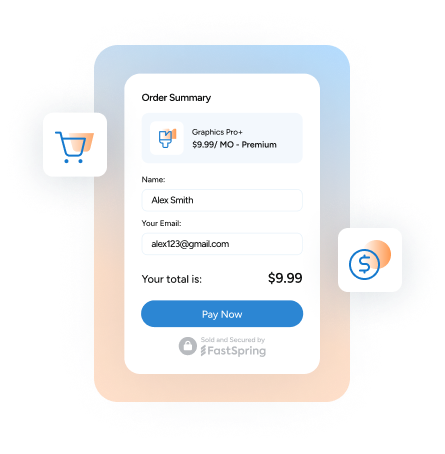
You don’t need more payment methods; you need a dynamic checkout experience — a system that automatically detects a user’s location and device and displays only the currencies and payment methods relevant to them.
3. The Leaky Funnel
It’s natural to assume that a conversion occurs when a customer clicks “Buy.” In reality, cross-border sales face hidden obstacles that silently kill conversions and erode margins.
First, you face false declines caused by a lack of local acquiring.
- What Is Local Acquiring? It’s the ability to process a payment through a bank in the buyer’s own country. Without it, your transaction looks “foreign” to the buyer’s bank, triggering security flags and declining valid customers. This creates involuntary churn: Your product works, the customer wants to pay, but the banking infrastructure rejects them.
Second, you face value erosion.
- What Is Value Erosion? Even when payments succeed, standard payment service providers (PSPs) often apply high foreign exchange (FX) fees on every transaction. You might be making the sale, but you aren’t capturing the full value of the revenue.
4. The Finance Burden
Selling globally is exciting for the sales team, but without a unified platform, it creates a resource drain on your back office.
The core problem is fragmentation.
- What Is Fragmentation? If you sell in USD, EUR, GBP, and JPY using standard PSPs, your finance team is forced to reconcile multiple merchant accounts, inconsistent report formats, and varying settlement dates.
What should be a simple month-end close turns into weeks of spreadsheet wrangling to consolidate data. This operational debt scales with your growth — the more you sell, the harder it becomes to report on it.
The Solution: A Merchant of Record
The do-it-yourself approach to global sales — piecing together a PSP like Stripe with third-party tax tools and fraud plugins — often leads to a bloated total cost of ownership.
This is why high-growth SaaS companies partner with a merchant of record (MoR) like FastSpring.
When you sell through FastSpring, we become the legal seller of the product. This shift offers three critical advantages:
- Immediate Tax Compliance: We handle the calculation, collection, and remittance of taxes in more than 240 countries worldwide, including all U.S. tax jurisdictions. You don’t need to register your business in Berlin or Texas; we are already there.
- Higher Approval Rates: Because FastSpring processes payments locally in major regions, we see significantly higher authorization rates than standard PSPs. We also manage dunning behind the scenes to recover revenue that would otherwise be lost to churn.
- One Wire, One Report: You can sell in 20+ currencies to maximize conversion, but FastSpring converts and remits a single, clean transfer to your bank account. We absorb the complexity so you can focus on your product and your business’ growth.
Go Global Without the Headaches: Partner With FastSpring
You’ve built a world-class product in LATAM. Don’t let the complexity of global bureaucracy slow you down.
By partnering with FastSpring, you gain a liability shield against tax risk and fraud, while delivering a seamless, localized experience to buyers anywhere in the world.
Ready to scale your SaaS beyond borders? Schedule a demo today and let us handle the complexity.