








 Buyer Support
 Seller Support


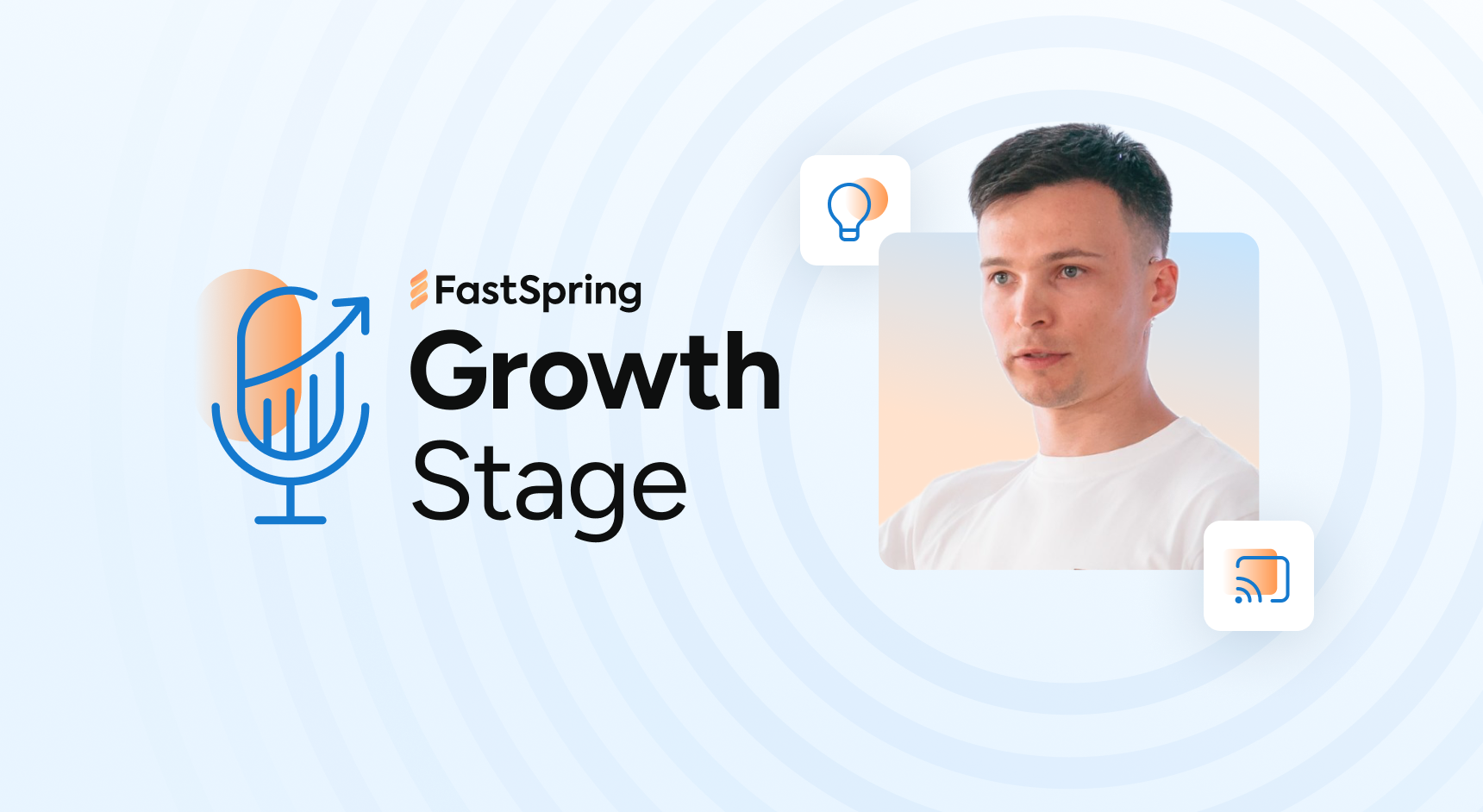
In order to grow your app in an increasingly competitive landscape, you’ll need to master a variety of strategies to stand out and maximize your chances of success. One of the key ways to maximize your chances of success is to take advantage of web2app to increase your profitability and the conversion rates of your UA ad campaigns. But how do you go about launching web2app in a way that won’t upend your product roadmap while still delivering material results for your business?
In this episode of Growth Stage, we interview Andrey Shakhtin, the CEO and Co-Founder of web2app platform FunnelFox, about his thoughts on:
- What the top challenges for growing a mobile app business are in today’s landscape.
- How web2app is opening up new opportunities for app publishers.
- What is allowed / not allowed with direct monetization.
- What you can do to take advantage of this trend, including leveraging the newly accounted FastSpring + FunnelFox integration.
If you’re thinking of adopting web2app, or you already have and are looking for tips to bring your campaigns to the next level, don’t miss this episode. Watch or listen now!
Podcast Full Interview: Audio


Podcast Full Interview: Video
Transcript
David Vogelpohl (00:04)
Hello everyone and welcome to Growth Stage where we discuss how digital product companies can increase the value of their business. I’m your host, David Vogelpohl I support the digital product community as part of my role here at FastSpring and I love to bring the best of the community to you here on Growth Stage In this episode, we’re going to be talking about getting the most out of your web-to-app funnels for your mobile apps.
with the new FastSpring and FunnelFox integration. And joining us for that conversation is someone who knows quite a bit about Web2App as well as the integration. I’d like to welcome to Growth Stage the founder of and CEO of FunnelFox, Andre Shakhtin. Andre, welcome.
Andre Shakhtin (00:47)
Thank you much. Hi David. Thank you for having me
David Vogelpohl (00:51)
Yeah, of course. Really excited to have you here and be able to kind of unpack Web2App strategy a little bit. And for those watching and listening, what Andre and I are going to talk about today are his thoughts on the top challenges for growing a mobile app business in today’s environment, how Web2App is opening up new opportunities for app publishers and developers.
what is allowed and not allowed in direct monetization and what you can do to take advantage of this trend, including leveraging the new FunnelFox and FastSpring integration? So before we get into the meat of the topics here, Andre, I was kind of curious. I asked a similar question of all guests of Growth Stage, but what was the first mobile app or in-app purchase that you bought with your own money? Like what was the first time thing you spent money on?
on a mobile app.
Andre Shakhtin (01:48)
gosh, was quite a long time ago. Yeah, I keep been working with mobile apps. I think it’s like already 16 years and I working a lot on developing mobile apps and testing them and selling them. So I tested a lot different apps, including like
starting trials, starting subscriptions. I think that the first purchase that I made consciously for me, it was like something like music streaming app or something like this. I don’t remember the name of the app. Yeah.
David Vogelpohl (02:31)
Music streaming app, that’s a good one. I think mine was I paid ninety nine dollars for a Garmin map app, like in the very early days of mobile, before like Apple Maps and Google Maps were free and on the phone. I spent ninety-nine dollars, I think, on the the app. And it’s funny that you mention a music streaming app because there’s this construct, I think, with direct monetization in apps.
Where companies come to the that strategy with different perspectives. And music streaming apps in my mind are often associated with, of course, music streaming companies. And if you go to Spotify or if you go to Pandora, I guess back in the day, maybe when you were testing this thing, if that was popular back then, and you said, What kind of company are you? They would say, We’re a streaming company. And then they would say, and we have an app and we have a you know website and all these other ways you can.
Consume us. And this idea of direct monetization is just a standard part of doing business for a streaming company. It’s not like this new thing they think about. But I feel like other companies that are kind of maybe more app first or mobile first, direct monetization might be more foreign to them. So I think it’ll be interesting to understand some of the dynamics here as we dive in.
Before we get to the the kind of more meatier questions though, I’m just curious for those that are not familiar, if you could explain a little bit about what FunnelFox does and what you do there.
Andre Shakhtin (04:10)
Yeah, FunnelFox is an end-to-end platform for building, launching, and scaling your web funnels, which means that you can distribute your app subscription on the web, acquire new traffic, a new audience from web campaigns and new channels, new user-requested channels, and just sell subscription on the web and then…
redirect users to app downloading, which provides you lot of benefits, basically. So our platform includes basically its core product is a funnel builder with different integrations, including fast print for enabling payments for selling subscriptions. And the main benefit probably is that we help customers to launch faster.
and with the highest metric because we implemented all the best practices on the market inside the product. So you can do the final with the best practice and start with already like good metrics and high performance.
David Vogelpohl (05:26)
So that’s a really good way to frame it, launch faster and with inheriting all the best practices that you and your team have kind of acquired and implemented into the platform. And you know, it’s interesting as we kind of talk through what it does. I feel like FunnelFox is one of those things where like picture is worth a thousand words. we’re not really doing like the screen sharing thing here today, but just so people can visualize if I’m building a funnel in FunnelFox.
The start of the funnel is effectively a social ad, an ad on Instagram typically, is that right?
Andre Shakhtin (06:03)
Yeah, it could be Instagram or TikTok, for example, Google. Yeah. Okay. Also can be like organic traffic as well.
David Vogelpohl (06:15)
And so I’m starting at a place, either social ads are I guess organic as well. And then the user is directed to a web funnel. So not directly to download the app in the app store, but to a web funnel. And that web funnel is powered by FunnelFox. So I guess if you were to do this on your own, you could code your own mobile web funnel.
And then try to capture those best practices and iterate on it and integrate all the tracking and payments and everything on your own. And then FunnelFox effectively makes all that easy. Like a non-technical marketer, non-technical founder, even a technical person who just wants to save time can go in and quickly set up these highly optimized funnels. Is that a good way to think about what FunnelFox does?
Andre Shakhtin (07:06)
Yes, that’s true. So basically, we just like help our customers not to take care of like infrastructure things, but on the product side, but mobile app and distribution of the product across different audiences and different channels.
David Vogelpohl (07:25)
This is, I think, a really interesting opportunity. And we’re going to get into it as we dive into more of these topics. So we can go ahead and transition here to getting into more of the meat. but what do you, in your view, it sounds like you’ve been involved with mobile app development and growth for it said, I think you said 16 years earlier. you’ve seen a lot change in the mobile app industry. What do you think the top challenges are today for mobile app?
publishers, like what what what is I guess making it more difficult to grow and find success.
Andre Shakhtin (08:02)
Yeah, sure. think that like the biggest challenges is that the lack of flexibility of the app store and the levers for grow if you just like stick with the only like in-app purchase because you have a restriction regarding attribution.
when Apple introduced IDFA restrictions in 2021. And basically it killed almost like all approach with working with paid channels, with social media campaigns, because you cannot attribute the exact campaigns, exact ads to purchase to user.
actions and high commissions as well. it’s 30 % from 15 to 30%, which is quite ridiculous compared to web payments fees and additional restrictions in terms of up store reviews and monetization of flexibility and all these things. you.
you need to act to be framed by app store rules and guidelines. And it’s all work against app developers, I think, right now. And so there was a time when app store help app developers to distribute the apps when there was a lot of app store traffic or gaining traffic and et cetera. But nowadays it doesn’t work.
like that anymore, it’s just mostly only restrictions than like channel to distribute the app.
David Vogelpohl (09:57)
So it’s interesting to hear you invoke app stores driving growth for app developers and publishers. And I think like one of the tailwinds, the things helping app publishers, of course, is the rise of the Gentec development. I can create and optimize features faster than ever. I can create an app faster than ever. I may be able to create an app even if I could never create one before.
because I wasn’t technical enough. Do you feel like the dramatic increase in the number of apps is also what’s driving this push for ASO to not be as effective as it has been in the past? Like are there just more apps competing?
Andre Shakhtin (10:42)
Yeah, for sure. it’s the amount of the new apps increase since like, AI adoption increased. But the problem is that it’s not enough to build and develop the app. It’s, and especially when we have like this, the low barrier for developing apps and launching new app, the distribution is a king right now. So it’s
It’s like it’s all about the cheap channels for distribution for, uh, please come in with these channels and, um, growing revenue, uh, through these channels. There’s the thing. And, uh, it’s just not enough. Just develop up and put it on a store. Yeah. You need to, uh, you need to run traffic. You need to have campaigns or, uh, some
viral mechanics, etc.
David Vogelpohl (11:44)
Yeah, there’s a old baseball movie with a slogan that says, if you build it, they will come. I won’t go into the movie, but you I think your point here is just because you build a good app doesn’t mean you’re gonna get attention and it’s gonna grow. And that the kind of drastic increase of the number of apps that are happening with the rise of the gentic development means there’s even more pressure than ever on organic growth in ASF. Yeah. And so
Publishers, it feels like are being like forced more than ever to take advantage of other organic growth levers. And then also, of course, paid. And to your point, if I’m the UA manager and I’m out there trying to get new users into my app and I’m pointing those UA campaigns to download the app directly from the App Store, I’m getting cut off from a lot of data that I can use to help optimize those campaigns.
And then I guess you pointed out also I’m having to deal with, you know, lower profitability than I might be if I’m monetizing that directly, paying those high commissions, if you will. And then also dealing with restrictions on how I can price and package merchandise and monetize my apps. so I’m I’m kind of giving up a lot of control.
But I’m not necessarily getting the organic benefit from ASO. Is that is that a fair way to think about it?
Andre Shakhtin (13:14)
Exactly. Yeah. And of course, like App Store provides also the convenient platform is like payments, for example. It’s payment infrastructure is quite convenient, but not distribution. And I think the App Store doesn’t, doesn’t fit up your permits nowadays in terms of distribution, in terms of, it’s not marketplace anymore. Basically. It’s just like
catalog of app for the load is app and payment infrastructure probably.
David Vogelpohl (13:49)
Yeah, because that’s like, and I guess this is like literal businesses. So maybe the word social contract isn’t the right way to phrase this, but like I feel like the trade-off of participating in the app stores, at least initially, was like, hey, we’re gonna bring you lots of customers. And in the early days, it seemed like that was actually really true. And it was a good trade-off. Like, yeah, I’ll give up 30% if you’re gonna create the platform and get awareness and get me new users.
Andre Shakhtin (14:05)
Yeah.
David Vogelpohl (14:18)
but it but in today’s world, I don’t know how many total apps are out there, but like that seems unrealistic for most publishers that that’s actually going to be a big driver. And so then if I have to go out and spend money on Instagram or TikTok or something else to get the users, well then what is your function as an app store? Is it you’re you’re like a launcher for my app or something like that? And so I can see where this would make apps start to feel like, what are you even doing here?
I and and I feel like Web2App is so unique in this whole dynamic of, you know, paying App Store fees or not paying App Store fees, because it’s such a pure version of it. so let me pause for a second there though and ask you like what is Web2App? Help other people explain it who might not be super familiar with.
Andre Shakhtin (15:08)
Yeah, so Web2App is an approach to distribute your mobile app when you acquire new traffic, new users to web version of your app onboarding instead of directing them to absorb directly. You’ll land them on a web landing page or web version of
up and burning or just a version of product. And then you sell subscription right on the web. And after purchasing a subscription, you can go to App Store and download the app and just purchase subscription. And this approach provides a lot of benefits. First of all, it’s, and the most important one is
traffic attribution because it works as a website basically. You can use Pixel and server to server integration with ad networks. So you can attribute each campaign, each ads to each user and the actions immediately. So you can get the signals immediately. You can change your campaigns on that.
this campaigns and ads quickly and with a much less budget because you can get these signals immediately. The second thing is that there are much lower payment fees. As I mentioned, usually it’s like from 3 to 5 % depending on payment provider. And instead of like 15 to 30 % in App Store,
Another benefit is higher subscription retention because you can manage the whole flow of boarding of users. So when they want to cancel subscription in App Store, you cannot really control it. Users just can delete the app and be asked if you want to cancel the subscription or not. Of course, I can cancel it. I want to cancel it because I deleted the app.
In web payments, it doesn’t work like this and you can control completely the flow. You can design it as you wish to balance your subscription retention and find the trade-off with the user, providing some win-back offers and something like this. it’s very powerful.
technique to improve subscription retention. And there are a lot of more benefits like flexibility of monetization, can come up with a different subscription configurations, pricing, whatever you can build on your infrastructure and with the tools. And it’s all basically unlock
for audio developers how to unlock the new revenue stream that is more predictable with a high performance. We did research, we published it recently, where we discovered that basically we compared two funnels. One funnel is like from ad click to purchase in app funnel, including like…
app store downloading the app, going through app version of onboarding and purchasing inside the app and web to app. The same flow from ad click to going through web onboarding and purchasing on web. And we discovered that the conversion rate is twice higher in Web2App. And then we…
try to learn what’s the difference in LTV and LTV is also higher. So it converts better and monetize your audience better, which is like explains why Web2App is so popular and why it’s growing right now because it’s just more, provides a higher performance in terms of metrics, in terms of human economic growth.
David Vogelpohl (19:56)
Yeah, these are great points. And I think you hit on one of the ones that was really surprising to me as I started to peel back some of the onion layers of Web2App So access to the the date the you the analytics and attribution was an obvious clear benefit. pricing and packaging flexibility compared to the restrictions of app stores, that was a clear benefit.
I feel like owning the relationship with your user instead of like renting it from the app stores was another clear benefit. In very few other industries, do you not actually own the direct commercial relationship with your customers? So that made a lot of sense, especially if I’m the one paying for the traffic and user to come and like check out and use my app. the lower churn rate on subscriptions was a nice surprise, and we see that consistently across the app industry on Web2App.
and hot much higher subscription renewal rates leading to those higher LTVs, as you pointed out. But the bit that surprised me was the higher conversion rates. my assumption was that you know the ease of purchasing through the app store would lead to higher conversion rates. Now that might be offset by the fact you’re paying higher fees and having a higher churn on those subscriptions.
And that’s what I initially kind of walked into this thinking would would be the case, is that I’m going to yield, you know, conversion rates in favor of higher profitability and higher LTV. I’m going to make more money, but with less transactions. And you actually have discovered it’s the opposite. what do you think? Why is that? Is it because people can pay with like Apple Pay and Google Pay on the web, and it’s pretty easy there too?
Or what do you why do you think people are so willing to convert in a web funnel? part of the UA campaign?
Andre Shakhtin (21:51)
That’s a question. It’s a little bit tricky how you need to consider funnel. There is a common misconception of comparing funnels because in app funnel, all developers get used to compare that from the first screen of onboarding, just missing what happened before downloading the app.
but it’s also like the part of the funnel and the important part of the funnel. And if you compare that from ad click, from very first impression, you will see that there is a huge drop on app store page when a user need to decide if they want to download the app or not. And at this step, user has low motivation to do it because it’s like,
quite obstacle for them and friction because they are not convinced yet to try out and to download the app because they already have a lot of apps. It’s one more app and why I need to download it just to try it out and check what’s inside. And the first point, the second point that like the whole funnel is not consistent just because like
when they see the ad on Instagram, when they’re like scrolling the feed and click on the ad, they land on the Store page, which is like generic. Yeah, and not just like continuing the flow and compare it to what we have in the Web2App. In Web2App, when a user clicks on ad creative, they land on Web…
web page where you can just continue the flow, continue asking them what they are looking for, what’s their challenge, what their goals. And it looks more natural for users without any frictions in the very beginning. So you can convince users to keep going, to keep engaging in the flow without any hard commitment.
steps with downloading the app or something like this so they can engage in the very beginning and go to the paywall with more motivation to try out because they consider that the majority of web funnels implemented in form of quiz with basically it’s questionnaire asking them about their challenges, their goals, etc.
personalizing the experience of the user. All this experience just provides a sense of personalization for users and they have a higher motivation to try out the product and to purchase it at the end.
David Vogelpohl (24:59)
That makes a lot of sense. So if I’m directing my ads directly to the app store, I kind of have this cold generic experience that every other app listing has on the app store. I can’t really tell a unique story. I can’t take the context of the user right before they landed at this place and incorporate it into my design and tell a unique story that, you know, hopefully sells my app and its value in a better way.
And so I guess maybe that is more intuitive now that I think about it through that lens. But it’s such a nice surprise. You get all these additional benefits of data, as well as higher conversion rates, higher LTV, a lower churn associated with that. So it’s a really interesting and exciting opportunity for folks. Now, one thing that comes up a lot though as people explore this strategy is like, is this allowed by app stores?
do app stores punish you for doing direct monetization? Does it affect your ASO? what are your thoughts on those kind of questions?
Andre Shakhtin (26:04)
Yeah, it’s a good question. Actually, it’s fully allowed and App Store and Apple just cannot distinct it anyhow because the whole experience and the purchase happens before the App Store. So basically you have another version of your product and weapon boarding could also count as a product.
to the product, you have a web version of product and mobile app is like one of the interface to that. And you acquire these users not from App Store, even if you buy it in Meta, for example, or TikTok. But the whole experience just lies outside of App Store and the user just download the app already with subscription.
There is a like, you just need only to take care of like the good reviews of App Store because users like tend to post reviews about payments in App Store, which is not like relevant because it’s not like App Store payments, it’s web payments. And this is one of the things that like Apple…
can be reviewed and can be claimed. You need to do something with that because it’s web payments, not absurd payments.
David Vogelpohl (27:39)
So I guess like if I think about it from like the high level, if my conversion rates are higher on my campaigns, I guess maybe I’m also getting more app downloads and installs, which probably doesn’t hurt my app rankings as well. but it’s interesting because in the way I think about Web2App is I think I like to use like people I think often think of like the Spotify and Epic like lawsuits and and what they’re going after.
And and that is really around linking from inside the app to the web or even embedding your own payments inside the app itself. And Web2App is completely outside of all of that. the way I like to explain it to people is like with Netflix. If I go to Netflix’s website and I pay for a subscription, I can use the Netflix app on my phone and the app store sh
Which don’t and shouldn’t get a cut of that and have had that policy for a very, very, very long time. And to your point, I’m the one as the app publisher paying for the user to discover the app. So not only is it allowed by policy, but it’s kind of allowed by principle too, which is like if if your value as a marketplace is bringing me the eyeballs, bringing me the users, if if you’re not even doing that, again, in principle, I I I shouldn’t be charged extra for that.
but in in in in practice, in the actual terms, it is completely outside of things like steering and other kind of in-app experiences where there might be restrictions or different things that are allowed and different geographies. And I don’t want to get all into the steering side of things, but from the Web2App side, it’s kind of completely independent of
kind of the Spotify and Epic battles that are happening for the in app experiences, because to your point it’s all happening outside the app and the app store before you even get there. Is that fair?
Andre Shakhtin (29:36)
Yeah, sure. To clarify that, I wouldn’t recommend to only stick to web-to-app and get rid of in-app purchases. No, you need to leverage all the channels. You can get revenue and decent revenue from App Store as well, so you need to use it as well.
David Vogelpohl (30:00)
Yeah, that’s a really good point. don’t want people walking away thinking they should like go all in and ignore in app. you know, work with do you know, do what’s best for your your app and obviously like you said, diversify. are there certain types of apps that you think are a better fit for Web2App than others?
Andre Shakhtin (30:21)
It’s a good question and it’s different for different apps. Historically, Web2App works very well for health and fitness apps because it was easier to come up with some questionnaire, a quiz, Web onboarding works very well for health and fitness apps.
And you can build a strong personalization based on the answers of the questions and et cetera. Now Web2App goes far beyond health and fitness getting momentum in photo and video verticals, even utility, educational apps.
quite a lot of benefits from web funnels. I think the only vertical of apps that are quite struggling to launch Web2App, it’s probably games, but they have a web shop, which is like another form of Web2App, but with another funnel.
apps like I know VPN, for example, also can distribute the apps through web top, but it’s more difficult because it’s connected with functionality. So basically you start playing when you start enabling the VPN, for example. But you anyway, you can come up with some
to personalize the offer. So for example, can build and time to target like different use cases. So for example, you need to use VPN for security. It could be like a different offer for different type of product for you. This is different offer is different pricing. Or for example, you need VPN for to get access to like
some restricted content, websites, it could be another offer. So you can use web funnel, web tab just to segment your audience to provide them with the right offer.
David Vogelpohl (32:45)
That’s really interesting answer. And I like the notion that the best fits for web to apps from the app perspective are apps that have a funnel where you’re trying to tell a unique kind of story and where the flexibility of a web funnel would provide you a unique advantage over the inflexibility of you know linking directly to the app store. I like the idea of health and fitness being kind of
lucrative for that because like to your point, you could ask quizzes and questions, you know, what are you trying to achieve? What kind of player are you? I guess if it was a sports app, like that kind of thing. and I think that’s a really interesting way to think about things. what you kind of talked about mobile gaming for a minute and and that’s such a different universe in terms of the strategies for direct monetization in mobile. but one of the
The areas that mobile games focus on is pricing and packaging when it comes to their web stores. And the common strategy there is to give more entitlements for the same price that you might offer in an app, meaning that if I have a gem pack and it’s a hundred gems on the in the game, maybe it’s a hundred and ten gems if you buy directly from the app store. So games tend to favor more entitlements for the same price. How do you think about?
Pricing and packaging strategies for Web2App funnels? Is it the same price? is it at a discount or is it the same price with more entitlements? how or something else? How how do you think about the best pricing and packaging strategies for Web2App?
Andre Shakhtin (34:29)
Yeah. The price used to be higher in Web2App compared to in-app monetization. But now our research shows that the pricing is quite the same. the app developers substitution is the same price. Quite the same, yeah, it’s not quite the same. It’s similar to what we have in app funnel.
the only difference probably it’s like configuration of this subscriptions in web funnels. It’s common things that likes it’s called like pay trial when you charge users for example, three bucks or one bucks for seven days like it’s called like pay trial and
After this trial, the full subscription starts. And also the most common configuration is like one week trial and one month subscription, three months subscription, or one month subscription, three months subscription and annual subscription plan. So this is one of the most common configurations.
David Vogelpohl (35:46)
So that’s really interesting. So like in gaming, I’m I’m maybe as a gamer, I’m comparing the price, right? I have a hundred gems I can buy in the app or 110 I can buy on the web store. App users, particularly in Web2App, they don’t even know what the in-app price is. And so this idea that you would need to add entitlements or have a different or lower price on the web to encourage that behavior is kind of a race, not needed here, if you will. and so
It sounds like what you’re saying is that the true pricing and pa packaging advantage or or strategy here is to take advantage of different subscription configurations and capabilities available through direct subscriptions. and that that’s the the core value. And you don’t really have to make it at a cheaper price or add additional entitlements to encourage users to, you know, basically transact with you directly.
such an interesting aspect of it. And I think a lot of people when they think about Web2App, they’re thinking about the price parity versus the in app experience. But it sounds like from your perspective, it’s more around the configuration and the flexibility rather than some sort of like price difference between the two experiences to incentivize that behavior. Is that a good way to think about it?
I mentioned a couple of times the experience of monetizing through steering. And for those unfamiliar, that’s basically linking to a web store or web funnel from inside the app or game mobile game in the gaming sense. do you feel like steering is a viable strategy for mobile apps? Is it, you know, I I haven’t seen a ton of it. I know Spotify’s been been fighting for it.
I’ve seen a few app publishers find some success with it, with some of the lawsuits that have gone app publishers’ ways in the US and other countries. what are your thoughts on on steering in the app context?
Andre Shakhtin (37:56)
Yeah, I think it’s one of the growth lever for app developers. of course, I would recommend to try it out and experiment with that to compare not only conversion rate, but the whole economics, including refunds, cancellations, proceedings, and all these things.
Yeah, I think that it’s a good way where mobile app market should go, like with the more flexible ways to monetize the audience, because you can even offer different payment methods for users. So for example, someone can pay by PayPal. Yeah, and…
It’s really convenient, not just like stick with Apple Pay. I think it could be very beneficial for our developers to do that. And the only drawback that remains is attribution and which like web-to-app results completely.
David Vogelpohl (39:12)
Yeah, I like that holistic way of thinking about things. And I you earlier brought up LTV is a measure, thinking about the additional benefits of additional payment methods if you’re thinking about in-app steering. okay, so let’s get back to Web2App for a minute. And I’ve been really impressed testing out and seeing the capabilities of the FunnelFox platform and being able to build out and manage funnels there. FastSpring company I I work for, I’m wearing the T shirt, of course.
and and FunnelFox recently announced an integration. help folks understand like w how does that integration work and look like and what are I guess are the benefits in your mind of using a merchant of record like FastSpring with FunnelFox?
Andre Shakhtin (39:58)
Yeah, I think it’s huge thing because basically App Store and Google Play are basically merchant of records itself. if you don’t have App Store payment infrastructure and you need to take on the risk on your own and do anything on your own, it’s like chargebacks, compliance, taxes and…
performance with different orchestration, different process and acquiring and all this boring technical things, which I think should not focus on. They need to focus on their product and making their users happy, not that infrastructure stuff. And Merchant of Record Solution is the
the exact thing that app developers need for web payments, similar as they have it in App Store.
David Vogelpohl (41:03)
Very few people make that connection. if I’m explaining what a merchant of record payment provider is, I’m like, you’re kind of familiar with it already because like the biggest merchant of record in the world is the app store. And a merchant of record payment provider is like a marketplace without the marketplace. And so people that are are app developers that are familiar with like never having to think about payment orchestration or taxes or even payment sub tech support, which is provided
typically by providers like FastSpring, of course, including FastSpring, you never really think about that. Like Apple handles that for you, Google handles that for you. And I feel like people overlook that in terms of like the benefits of leveraging a merchant of record versus like doing payments directly yourself with the PSP. and I think it’s interesting. I think one of the kind of good combinations of kind of the FunnelFox FastSpring integration is you’re you’re kind of
Trying to move faster and produce better results by leveraging a platform like FunnelFox versus like going out and coding all this yourself. And that’s of course one of the other benefits of FastSpring is this idea of offloading in order to do a better job and move faster. so I think if I’m an app developer, especially if I’ve got a smaller team and I’m trying to be like really judicious with my resources.
these are these are great options. And I think if I’m just trying to scale and I’m even a larger org, there’s some benefits there as well. last question for you before we wrap it up. You’ve been 16 years in the industry, you’re kind of at the bleeding edge of of monetization today in mobile apps. What do you think is the n is on the horizon? Like what is the what does the future hold for app growth?
Andre Shakhtin (42:55)
Yeah, I think it will go with even more flexibility and diversification in terms of channels and growth levels, especially with AI. Because AI helps not only develop mobile app, but also it helps to distribute it. So you can create automatically ads.
and manage ads and you even like can automatically create web files. Right now, within FunnelFox we have our AI based builder. And I think that like the most of the thing will
and with the AI and yeah, think that eventually we will see like more cases like Epic Games and with like improving and increasing of flexibility whether it would be like by Apple initiative or just like external one.
David Vogelpohl (44:02)
That’s exciting stuff. I often say every day is the good old day for someday. And it sounds like there’s a ton of opportunity ahead for people to take advantage of. And I really love hearing that perspective. this was really great. Thank you so much for joining us today, Andre.
Andre Shakhtin (44:19)
Thank you for the conversation. enjoyed it.
David Vogelpohl (44:22)
Excellent. you’d like to learn more about what Andrea is up to, you can visit funnelfox.com. If you’d like to learn more about the FastSpring and FunnelFox integration that makes Web2App super easy, you can explore more at fastspring.com forward slash funnelfox. Thanks everyone for joining us here on the Growth Stage Podcast. Again, I’m your host, David Vogelpohl.
I support the digital product community as part of my role at FastSpring, and I love to bring the best of the community to you here on Growth Stage. Bye everybody.
Andre Shakhtin (44:55)
Bye.