












With the rise of in-game steering in the U.S., many publishers are left wondering: What actually works, and what is even allowed? While most studios keep their steering strategies close to their chest, there’s a massive opportunity for those who can navigate the “crawl, walk, run” approach to D2C. If you’ve been waiting for a peek behind the curtain of real-world implementation, this episode is for you.
In this special live recording from GamesBeat Next, FastSpring CMO David Vogelpohl sits down with gaming veteran Mike DeLaet of Ares Interactive to break down the mechanics of steering. They discuss anonymized but real-world examples of in-game steering for games currently live in the app stores, offering a rare look at what other publishers are doing to successfully (and safely) leverage D2C strategies.
If you’re looking for actionable insights to inform your own steering strategy and drive more revenue to your web store, don’t miss this episode of Growth Stage. Watch or listen now!
Podcast Full Interview: Audio


Podcast Full Interview: Video
Transcript
Speaker 2 (00:03)
Right. Hello everyone. Good to see you all here. So glad to be here for GamesBeat NEXT. As Tyga pointed out, my name is David Vogelpohl and I’m going to be your host for this session. Joining us with Mike, ⁓ what we’re going to be talking about is real world examples of in-game steering that actually work. Now, a couple of caveats here.
We’re going to be showing some real world examples today. We have anonymized the games though, so you won’t know which games they are. But these are the experiences and we’ve done like a fake game overlay to show you what those experiences look like without necessarily revealing which game it is. Another important thing to point out as we walk through today is that I am not a lawyer and neither is Mike. So nothing we’re giving you is legal advice and I would advise you to follow the same
a path that our customers follow at FastSpring, which is to follow the terms and conditions of the app stores and to do what’s right by your players and to check with your council if you think you’re coloring outside the lines. But we’re going to talk about coloring inside the lines today and we’re going to give you some clear examples that you can work off of. For those that don’t know me, I’m the Chief Marketing Officer at FastSpring. We’re a direct-to-consumer platform.
What I bring to today’s discussion is 20 years of optimizing e-commerce at scale, including extensively in Mobile and direct to consumer. I’ve also dabbled in flash game development and Zoom cosplay, and I have a lot of fun with my family and my favorite games. And joining us for this conversation from the publisher side, I’d like to welcome of Aries Interactive, Mike DeLaet Mike, why don’t you tell everybody about you?
Speaker 1 (01:45)
Thanks David. currently the president Aries Interactive We’re a stealth mode gaming company that will come out sometime in probably q1 of 26 to announce what we’re up to We are Austin based company founded in mid 2024 by Niccolo DeMasi the old CEO and chairman of Glu Mobile We I have over 28 years of experience in tech and 20 years in gaming worked at Glu Kabam, Rogue Game Scopely and most recently Mattel
Originally from Kansas City and based in Los Angeles with my wife and three kids and two dogs. ⁓ currently playing Battlefield 6, Madden 26 and always Call of Duty. So great to meet everybody.
Speaker 2 (02:23)
I’ll have to squad up with you on COD one time, Mike. ⁓ But one of the interesting things about Mike is we were preparing for this. One of my coworkers, the head of gaming at Fast Spring, gentleman named Chip Thurston, ex-Scopely and SciPlay, we were talking about this panel and he goes, Mike DeLaet’s on your panel? And I was like, who’s Mike DeLaet? Wow, this is incredible. I didn’t know that much about him. And what was interesting in the way Chip had described it is at his time at Scopely, he was kind of following in Mike’s
footsteps who had come before in terms of leading a lot of their monetization and direct-to-consumer strategy. And so Chip had stumbled across Mike’s name and systems and insights. And so I thought that perspective would be valuable to add to this panel today. So the first question I want to understand from you though, Mike, in your years of 20 years of wisdom in the gaming industry, how has direct monetization changed over time? Like so much is changing today, but like let’s zoom out for a minute.
⁓ What is your view of how direct monetization has changed over the years in gaming?
Speaker 1 (03:26)
part of it is the rules have changed of what you can and can’t do as it relates to legal rules, platform limitations, ⁓ customers of what they’re willing to kind of accept and monetize. ⁓ That D to C relationship of like actually owning the customer has changed a lot and it’s something we’ve had to navigate on the developer publisher side for quite some time of how do we navigate that? How do we skirt the rules without breaking rules? How do we be respectful of our relationships with platforms like Apple and Google?
And also, how do you do games maybe not on the Mobile platforms? Do you do direct Android distribution? Do you do PC SKUs of games that have D2C relationships and monetization? So it’s something that we spent a lot of time on.
Speaker 2 (04:08)
So you think of that evolution from like a cross-platform perspective, meaning that you might have a different approach on how you approach direct monetization based on the platforms where you’re distributing your games?
Speaker 1 (04:18)
100 % for sure
Speaker 2 (04:20)
Okay, so it changes, and I heard you talk a little bit about PC gaming and think about direct monetization there, and then we talked about rule changes, which are happening as we speak, even this morning announcements in Epic versus Google, which we’ll talk about here in a minute. We’re not gonna go too deep on that. But overall, we see the industry is changing. So we see that as well, of course, in our work, and so we partnered with Omdia to go ask game publishers what their thoughts were in terms of direct monetization.
We asked a bunch of questions, but two of the ones that really stood out were, do you currently make use of a web store today? Of the 100 or so large publishers and executives we interviewed, 57 % said yes, no for 43. But then when we asked the no group, do you plan to make a web store within the next 12 months, 60 % said yes, and another 36 % said yes.
but they just don’t have the specific time frame of in the next 12 months. And then a tiny little sliver of 4 % said they weren’t really sure what they were going to do. So to me, this really indicates a trend that publishers are really starting to embrace this idea of direct monetization. What are your thoughts on that trend?
Speaker 1 (05:37)
I’d say in general if they’re not doing it, they should be doing it. Like margins are already very thin in the game business with time marketing, development cost, studio overhead, et cetera. Like if you can improve margins at all, it’s something you should really be thinking strongly about. And that’s part of the reason why we did it at Scopely and why I continue to do it to this day.
Speaker 2 (05:55)
Do you think that there’s like a size limit though? Like if I’m an indie studio and I have a handful of developers, like is now the time to think about a web store or do I want to get my game more established and start to think about that later in my journey?
Speaker 1 (06:08)
In general, think you want to focus on game first, make sure it’s a really fun, great experience. And if it’s engaging and monetizing your users, then it’s a good time to think about, we open up a D2C web shop?
Speaker 2 (06:17)
Okay, so a little bit of a critical mass there. And we know the rules are changing, and maybe this is changing the idea of the critical mass in Epic versus Apple. We saw that steering is now allowed in the US, and we’re gonna do a double click here in a little bit and see some examples of what that looks like. But in order to understand direct monetization, I wanna zoom out and think about it in the four types of funnels you might have. Now, for this conversation, again, I’m not a lawyer. Please consult with your lawyer for specific legal advice.
But we’re going to talk about the idea of things being allowed and what we generally mean is not in violation of the app stores terms and conditions. And generally when I reference allowed, I’ll also mean there’s not going to be an additional fee on top of that. So in some jurisdictions you might be able to steer, but maybe there’s a 27 % fee from steering. So in the sake of our lingo today, we’re going to consider that as quote, not allowed. I can’t steer without additional fees. And I also like to think like, well, if
there are no rules, what would that look like? And I think it’s helpful to understand the environment in which we’re operating. So the first type of direct-to-consumer funnel that we will lump in the not allowed bucket is embedding your in-app payments from third-party platforms like FastSpring, Exola, or whoever. And this is maybe the truest form of owning direct monetization. I don’t have to bounce outside my game. It’s just available in my game. This is, I think,
kind of the purest form of direct monetization, today is only allowed in side-loaded Android apps, which of course players aren’t very used to doing, and this is fairly rare. ⁓ And so as we think about embedded payments and steering and steering to web checkout experiences, it really asks this question, and I’d like to ask you, Mike, what your view is.
Do you think in the future we will even need web stores? What will we eventually get to where we can embed or just steer to checkouts? Does the web store have a role in the future?
Speaker 1 (08:15)
Yeah, I think you always want to have that, right? Because you want to own the direct-to-consumer relationship, and you want to give them the ability to pay however they want to pay. So if they want to go to your web shop and pay there, or if they want to do it in an app, then you should let them do it either way.
Speaker 2 (08:28)
So as the rules change in geographies, I might ⁓ steer to a web-based checkout. Maybe I can only market outside my game to drive people to my store. But it sounds like you’re thinking, no matter what, I would have a store for my players to have that option to buy, rather than just funneling them through a web checkout.
Speaker 1 (08:48)
Yeah, I think so, yeah.
Speaker 2 (08:49)
OK. So, will you need a web store in the future? It seems like it will be part of the mix. OK. So we’re exploring the four flavors of direct-to-consumer funnels. We’ve talked about the embedded in-app purchasing, which is largely in the not allowed bucket. So now let’s explore the second flavor, which should be fairly familiar to all of you, because it’s most of you who’ve been focusing on direct-to-consumer, because this has been the primary way you’ve driven direct monetization through your web stores to date.
And this is marketing outside of your game. This might be promotions in your Discord community, to your social media ⁓ communities, on your social media profiles, or of course maybe you have a creator program where the creator is promoting, you know, in this case store.randomconquest. This is a mock-up game and where you might get more gems or coins by visiting the store. And this is a very common technique for doing direct to consumer and kind of the allowed bucket, the most common way.
Mike, you’ve done a lot of this in your career. So what do you think are the best tactics for marketing your store outside your game?
Speaker 1 (09:57)
The things we’ve found that work really well are social media marketing. So you have these communities that will like your Facebook pages for the game, your Instagram, TikTok, also your Discord community, like really making it known to players that you should really explore the web shop. You could get discounts or better purchases or extra bonuses if you purchase there and really building that player.
know, behavior and habit to really go there as often as possible to see what’s available because you might get better deals if you buy directly from us versus through the Mobile kind of app, for example.
Speaker 2 (10:30)
Now if I have like a 90-10 or 80-20 rule where like 80 % of my revenue is maybe coming from 20 % of VIPs, do you think that makes it easier for marketing outside your game because those VIP players are more likely to be engaged with my social communities?
Speaker 1 (10:45)
Yeah, 100%. I mean, the games that are more mid-core, hardcore that have that kind ⁓ of split definitely will have players that are more likely to go to a webshop than more of a casual game, like a match three game. We found that those kind of games are less likely to go to a webshop because they do very small transactions anyway. But the VIPs that are spending, in some cases, hundreds of thousands of dollars, they’ll definitely go to get a better deal to the webshop.
Speaker 2 (11:08)
Okay, so that makes sense. And is that like a recommended strategy for certain types of games is to focus on VIPs when promoting your store rather than trying to focus on all players?
Speaker 1 (11:18)
If you have that kind of split, yeah, I think it’s important to really focus on VIPs, but again, you should open it to everybody.
Speaker 2 (11:24)
Yeah, makes sense. OK, so that’s the second type of direct-to-consumer funnels, where I have a web store and I’m promoting the web store outside of the game. So the third flavor of direct-to-consumer, also in the allowed bucket, is UA-based, or what we would call Web-to-App. Now, this is somewhat rare in gaming. And anyone doing this, I would love to talk to you after the event and see what you’re doing. But it’s very popular in Mobile apps.
And that is where we place an ad for user acquisition. We serve a web page that collects the user’s email address for a free trial. And then we ask the user to install, in this case, the game or in Mobile apps, the app. You’ve collected the player’s information. You’re able to communicate with them outside the app store, not violating any steering terms or conditions. You are the one that paid to bring the user to the game and acquire the customer.
So you’re the one delivering that value, and you have the ability to market outside the game. So this is another direct-to-consumer strategy that you have as an option. But again, I haven’t seen a lot of it. Mike, have you seen much of this at all?
Speaker 1 (12:31)
I have not, but it’s a very interesting tactic to like again get that customer profile, get those emails on file, have that direct to customer relationship. So I think this is something we should definitely be trying.
Speaker 2 (12:42)
Yeah, I think it’s worth exploring. There’s also funnels where you don’t have to collect the email, and you can still use strategies like retargeting to communicate with the player outside the game. But another kind of option that you have, again, this is fairly popular in the Mobile app world these days. And then finally, in-game steering. So earlier this year in Epic versus Apple in the US,
The court ruled that Apple had to allow steering and Apple updated their terms and conditions and then many games started to implement this idea of steering. We’re going to look at some variants of this later on, but I kind of want to walk you through what’s happening. load, the player loads the game, clicks on the button to load the Mobile checkout, uses Apple Pay to pay, the user player ID has been passed along, gets pushed to Unity Gaming Services in the back end and enables the player with their.
coins in this case. So what you’re seeing here is the game loads Safari as a separate app. And so in my view, this is one of the purest forms of steering. So it is completely separate from the game. It’s loading Safari separate and apart from this. ⁓ So I think.
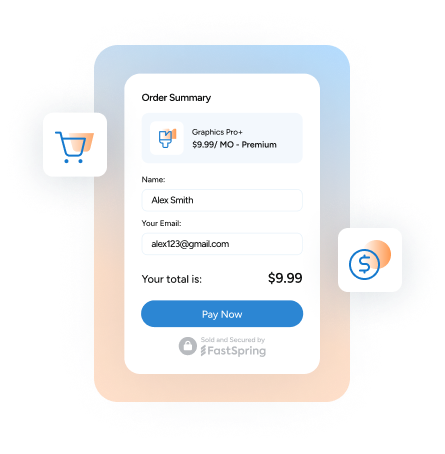
As you look at this, you can see it’s very fluid. There’s no scrolling. This particular example was built with FastSpring, but you can build this kind of thing with Xsolla and the other direct-to-consumer payment providers. And so as you see, I’m not linking to a store. I’m linking to a Mobile checkout. Now, of course, you can also advertise your store. We see a lot of top publishers do this, where they say, to our store and shop in our store and see our special items and our special prices and our special deals. But when you steer, you don’t actually have to steer to a
category page or a page of products, you can steer directly to the checkout. And as you can see, it’s very fluid, very easy for the player to understand. So we have a decent number of people in this room. There’s always talks about direct to consumer at these conferences. It’s very clear that publishers are interested in having direct relationships with your players, owning and not renting your relationships with your customers. So it feels like publishers and studios are largely ready
for direct monetization, direct relationships. But are players ready, Mike? Are they ready to take this leap? is the trust there? Are they ready to trust game publishers with their financial information and their payment details? Are players ready for this?
Speaker 1 (15:14)
It definitely takes time and it’s something we’ve been working on for a number of years now in the gaming space. think if you come from PC or console, you’re used to this already. For Mobile, it’s a little different because players are used to transacting on Apple or Google. They’re not used to going to some other page to transact. if they see things like Google Pay, Apple Pay, PayPal, they trust those sources. So you just got to build that habit of them being able to do that. And then as you do that, then they get comfortable with it like, this works. I know it’s a legit source.
I get the items in the game that I paid for, I get a receipt from like a PayPal or whatnot, and therefore, yeah, this seems like legit to me and they’ll keep doing it.
Speaker 2 (15:52)
Yeah, and it’s interesting ⁓ being in the industry and experiencing these things when I’m playing my favorite games or whatever. And I have kids, and this past weekend, my son comes to me with a fresh $20 bill in hand and says, Dad, I need more Robux And he pulls out his phone and he shows me, and it had steered me from inside, or still steered him from inside the game to their web store. He barely noticed. We used Google Pay and I.
money in my wallet and he had the experience there but he barely had noticed and one of the things that’s really interesting to me and we see this from the payment platform side in terms of like the different types of payment methods that are used is that a web store and offering direct monetization can unlock money you might not have got otherwise because that particular payment method isn’t tied to their app store account. Do you think that’s an opportunity for direct-to-consumer that people don’t think a lot about?
Speaker 1 (16:48)
Yeah, for sure. I mean, I think you should consider all methods for people to engage and interact with your community and your ability to drive revenue and monetize the product. So I think from a game publisher developer side, it’s something that really makes sense for us.
Speaker 2 (17:02)
Okay. So we know that publishers and studios are largely ready for direct relationships with players. ⁓ We think largely players are ready for these types of relationships and have that level of trust. ⁓ I don’t know if the app stores are quite ready though. So how should publishers balance their direct monetization with their relationships with the app store providers? Like they’re providing this very valuable service. They’ve been this huge driver in the industry.
huge part of the success of these publishers. There’s the desire to have that direct relationship and direct monetization, but you still have these super valuable partners. So how do you think about that balance with direct monetization?
Speaker 1 (17:44)
You know, obviously you got to adhere to the store guidelines. So I always say like, you know, I’ve worked with Apple and Google since the beginning of these stores and we have really strong relationships with them. We want to be respectful of those relationships. But they also understand we have to make money. We have to be profitable. In order to do that, we can make more content and more future products for them. It’s good for their ecosystem as well. So it’s not like we’re telling people you can’t transact on Apple or Google directly.
But we’re just trying to give people alternative ways to pay and engage with our content and ultimately help make us make more money and profit too so we can operate as a business.
Speaker 2 (18:16)
So if I’m making decisions that are best for the player, supporting the App Store and keeping that as a kind of front and center option, do you think that’s a player first mentality and then thinking of my store as optionality for people that might want to get more value for money or use payment methods that aren’t tied to my App Store account? How do you think about that from?
Speaker 1 (18:38)
I think it’s pretty seamless nowadays, whether you do direct payments on the Apple App Store or you do Apple Pay, like it’s about the same to most people, right? So I think in terms of how they want to pay, you should give them different options.
Speaker 2 (18:50)
Okay, so there’s that fluidity there. ⁓ Okay, so we’ve explored the four flavors of direct to consumer. We’ve talked about embedded in-app payments, marketing outside the game, ⁓ using UA-based or web to app, and then in-game steering. So what I wanted to do next was to go a click or two deeper into in-game steering and understand a little bit about what your options are.
Now again, just to reiterate, we’re going to show some examples here. Some of these are Android examples. And ⁓ who here have been following the Google versus Epic shenanigans here? So what’s happened in the timing of this is really wonderful, actually. ⁓ Right before these slides were due, ⁓ Epic and Google, there was a ruling in the court that basically opened up steering. And since then, after the slides were due,
Epic and Google have come to a settlement agreement that they have communicated to the court. And even just this morning, the judge declares that they’re going to take some time. They’d like some more transparency around this settlement. And the judge is curious, and I’m not making this up, why there’s suddenly BFFs. And so there’s this ambiguity around Android.
So when we review the in-game steering options and we think about what’s allowed or not allowed, I think there’s a bit of wait and see for me personally with Epic versus ⁓ Google, obviously. So I want you to think of these examples in the lens of iOS ⁓ in the US, so where steering is allowed today. You will see some Android examples, but be aware that it’s still kind of playing out in that case. So the way I think about
examples. I’m not going to show you like an ad for a store that links to a shopping experience on a store. I think you can imagine those types of things, but I want to talk about the canvas and the paintbrush. How are we going to create these experiences within our games and how are we going to deliver a seamless funnel experience for the player, but still be clear about where they are and what they’re engaging with. And so the first example, this is ⁓
the GIF I showed you earlier in this presentation. And again, it’s pulling up, in this case, Safari external from the game. And there’s many examples of this with top game publishers in the game store. And in my mind, this is the most pure form of steering. I’m linking to a web-based experience. I’m going outside the game and loading the browser. Very pure, safe form of steering.
The second option you have is to invoke Safari in the iOS context inside the game. And you would use Safari view controller for this. I think this is also one of the cool things about steering and direct monetization is that as you can see, these are relatively fluid and fast experiences. And it’s even sort of hard to tell the difference in some of these. If you look at the top when it loads the browser, you can see the URL.
And the difference, that’s the key difference between this version versus what we saw before. The other key difference is that Safari is loading in the game and not external to the game. And again, all of these examples are going to show the web checkout view of the world. And then the final version is a WebView overlay. So this is mimicking a browser, but it’s actually using WebView in the game in order to facilitate that. You could also use WebView to quote embed payments in the game.
And this is where we start to get fuzzy lines and how we think about what is allowed and not allowed. I’m not going to go to that level of depth. Again, follow the app’s source terms and conditions. Ask your legal counsel if you think you’re coloring outside the lines. Get their guidance. This is what our customers do. This is what I’m guessing Exola’s customers and all these other customers and publishers do to make sure they’re doing the right things and make sure you do that as well. ⁓ So.
Now that we have an understanding of the technology and the canvas and paintbrush that we have to create these experiences, I want to kind of come back to you now, Mike, in our last few minutes here and ask you how you think about the balance between showing the player that they’re going back and forth between these two, I guess, systems of the game and the web checkout or web store.
while still delivering a seamless experience? Am I trying to fake it a lot, or do I want to be clear at certain points for the player’s benefit or otherwise?
Speaker 1 (23:30)
I mean, ultimately I think it would be great if we could just do it very seamless. You never actually leave the game. It all just happens right in the app. Now the overlay views are one way to kind of tackle that. Bouncing out to Safari or Chrome and then bouncing back into the game is another way to tackle it. The examples you showed make it look very seamless to the user, but it does, it’s pretty clear to me anyway that you’re switching back and forth on a couple of those examples. You just have to make it super easy for the player because if you make it complicated, they’re not going to do it.
That’s for us, that’s the main thing we think about is the user experience and just make it super easy for people.
Speaker 2 (24:04)
So I play games that our customers make and the games I enjoy. I’m not just testing, right? And I’ll buy things in the game sometimes. But I just buy from the app store because it’s easier. And my payment method’s already there. I just bounce right through it. I know I might get a little extra for the game. So do think that players will take that extra step if it’s a little more complicated, if they’re motivated, like VIPs or otherwise?
Speaker 1 (24:29)
Yeah, I think about motivation more just what type of player they are, but what are you giving them, right? If you get an extra 20 % more gems or something if you buy directly from me, then I’m motivated, right? ⁓ If it’s the same deal, then maybe I’m not as motivated. So I think you got to think about it from that sense or exclusive offers or you do get more currency or something if you buy it direct ⁓ and really make it clear to customers that’s what’s happening. And I think they’ll be willing to support the developer if they like your product.
Speaker 2 (24:57)
One of the questions we asked in our survey with Omdia was like, why do you go direct to consumer? And saving margin was actually like third on the list. And like one of the top answers was around really that direct relationship. And so it feels like in some cases, publishers, even if it was like all the fees were the same, they’d be like, well, I still want the direct relationship with my customer. And I think from the publisher’s perspective, that makes a ton of sense why they would feel that way.
Do think there’s a benefit to the player other than just like, I’m going to get more gems or an extra SpongeBob skin or something?
Speaker 1 (25:28)
I do. Like if it’s a game you’re really into that I want to be able to talk directly with the developer and the publisher of the game and understand like what they’re doing, what’s the content roadmap, what new features and functionality are coming to the game and really have that community. Yeah. Since the psych you do want to discord or something like that. Like our game has close to 250,000 members on our discord channel and we’re constantly communicating with them, sharing with our update, our future roadmap, even of here’s what’s coming in the next update and getting them excited about it. And I think having those emails or any kind of
information on the users on file, it really helps a lot with that D2C relationship, which I think is critical for any gaming company.
Speaker 2 (26:05)
Do you have any advice on building communities ⁓ relative to promoting your direct monetization approach? It sounds like you guys have already done a lot of that, and I don’t think you understand what stealth mode means.
Speaker 1 (26:17)
Well, to be fair, we acquired that company. But they just spent a lot of time engaging with the audience. And over time, they put links and the Discord into the game itself and allow people to easily link out to join our community. And then people just building that direct relationship with us, which has helped a lot with our game.
Speaker 2 (26:36)
Excellent, excellent. Well, we are at the end of our time. I would love to hear about what you’re doing with your direct-to-consumer funnels, if you’ve played around with App2Web or any other things we’ve shown today. Mike and I will be around here all day, answer any questions. But thanks, everybody, and really appreciate it.