












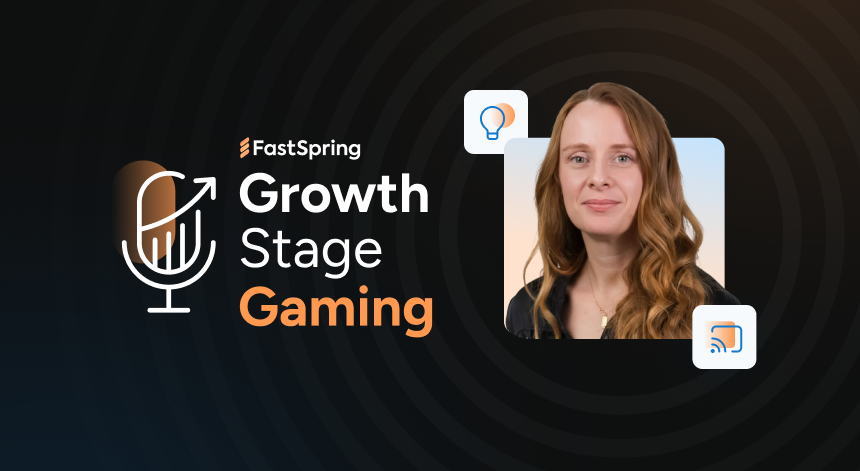
Are you wondering what it takes to deliver an exceptional experience for your players when it comes to payments and D2C, but don’t know where to start?
In this episode, we interview payments veteran Lindsay Walker about her thoughts around what it takes to build a global payment offering that players will love. Lindsay shares her thoughts on what good looks like, what really matters when it comes to local payment methods, and how you can think about your payment strategy based on the kinds of games you’re making.
If direct payments outside of app stores or marketplaces is a new topic for you, and you’re wondering how you’ll take full advantage of the new trends in D2C, don’t miss this episode of Growth Stage. Watch or listen now!
Podcast Full Interview: Audio


Podcast Full Interview: Video
Transcript
David (00:04.206)
Well, everyone, welcome to Growth Stage by FastSpring. I’m David Vogelpohl. I support the gaming and digital product community as part of my role at FastSpring, and I love to bring the best of the community to you here on Growth Stage. In this episode, we’re going to be talking about how to act global and pay local. In other words, what does it take to build global payments for your games? And joining us for that conversation is someone who’s done this tip to tail, if you will.
I’d like to welcome to Growth Stage Lindsay Walker of FastSpring. Lindsay, welcome to Growth Stage.
Thank you so much, hi.
I was going to say welcome back, but I think this is your first episode with us, is it not?
You can welcome me back next time.
David (00:47.882)
Okay, okay, good, good, good. I’m looking forward to that. And for those listening and watching, what we’re going to be talking about today, Lindsay is a veteran payment executive and leader. And what she’s going to be talking to us about are her thoughts on what good looks like in building global payment infrastructure. What really matters when it comes to local payment methods, and how you can think about your payment strategy.
even based on the kinds of games you’re making and publishing. So I’m really looking forward to this conversation with Lindsay. For those that don’t know her, again, a leader in the payment space. So if you’re trying to figure out payments for the first time, if you’re used to app stores and marketplaces and you don’t really know how that world works, Lindsay is a great ear to bend. Now, you won’t be able to ask your question today, but I will, and I’m really looking forward to that. So, Lindsay, I’m going to ask you the first question I ask every guest when we’re talking about gaming.
All right. Yeah, exactly. What was the first game you spent your own money on? Not a parent gift but like Lindsay money. Tell me the first
Yeah, it definitely would have been physical currency, right? So kind of dated myself, but I spent money on Street Fighter with an arcade game. And unfortunately, as a child, somebody came up to me and told me that I was too young. And I later figured out that they were actually just stealing the game because it’s that good.
my goodness, you got muscled out by a bully. Was this an adult or a kid that did this?
Lindsay (02:25.614)
I think it was a teenager and I was a very young child, but I just so badly wanted to go and smash those buttons. But I’ve had plenty of time since then to players to play Street Fighter.
Did you have or do you recall your favorite character on Street Fighter that you like to players to play? No. long time ago.
When I had no idea what I was doing then, honestly, I probably wouldn’t know what I was doing now. I’m more of kind of just a button smasher, right, to see what happens. But the tactile sensation, right? Gaming is fun in many different ways. And yeah, no, I loved everything about that.
Excellent, excellent. We’ll have to get you some free games to make up for that bully stealing your game.
Hit me up, please, yeah.
David (03:07.534)
And I mentioned when I first introduced you that you’re from FastSpring. Tell us a little bit about just high level what FastSpring does and what your role is.
Absolutely, yes. So I came to Fastspring as the Chief Customer Officer last year. So happy to be here, have learned so much from the amazing team that is in place. And one of the things that so interesting with what we were doing is really focusing on empowering the gaming space, right? And not just empowering the publishers and the studios, right? But really empowering the players at the end of the day. And so what we do is we empower players to players to play.
right? And we empower players to play where they want to make additional purchases for whatever that means for them, whether the purchase of game or
David (04:01.504)
Okay, I got you and this was like new for me when I joined FastSpring spring originally, but you’re the Chief Customer Officer and like FastSpring kind of has two kinds of customers in a way. Could you help us understand what what type of customers if you will because like there’s like the companies that use FastSpring and then the individuals and I guess other companies that use FastSpring bring to buy stuff. Help me understand how how that works.
Yeah, that’s a really interesting point. And I think it plays into why we’re very good at what we do. So there’s kind of two ways to look at this is that we are dedicated to the end player, just as much as we’re dedicated to our customers, which are the sellers, which are the studios, which are the publishers. And so we can’t do our jobs well unless we are constantly just maniacal about that player experience.
And so I think that is what sets us apart from a more, you know, from an app or from a traditional PSP is that we have to think of both because we are the merchant of record. Another kind of way to slice and dice is that we work with gaming, but we don’t only work with gaming. And I call that out here because it is really important and we’ll get into this a little bit later, but having that diversity with our seller portfolio,
actually plays in really well to our gaming community.
Excellent. Yeah, leveraging that economies of scale and like the lessons learned through multiple segments. So gaming is interesting because, you know, depending on what point of time and what kind of game you’re looking at, it’s very common, of course, for a publisher or studio to never have really had to mess with payments, know, leveraging app stores and maybe distribute games on Steam or Xbox or PlayStation or whatever.
David (05:54.402)
And while other industries might have figured this kind of direct monetization out long ago, a lot of game companies are kind of coming into this like I don’t even know what’s going on here. And one of the ways I find helpful to understand things is to understand like how would I build it from scratch? Like FastSpring is this like all in one solution that does it all for you. OK, great. But like if I built it on my own, what would that look like? So what does building your own payment infrastructure?
look like, like what would be the components and what would roughly go into that?
Yeah, let me kind of take one step back and even address the first part of the question. I think that with kind of moving into D2C, right, to your point, this hasn’t been an area where it’s been an operational need. And so what is really unique here that I love is that it’s just not about
connecting the dots, right? It’s not something that you have to do. It’s done because it’s something that you want to do, right? So there’s a broader strategy that exists behind this that’s different than, know, for example, you want to go and set up a web shop and you want to sell shirts, right? In order to make that happen, you have to do payments, right? But that’s sort of a standalone component and it’s table stakes, right? For you to do that. Whereas with gaming,
It’s just broader than that, right? It’s about connection. It’s about empowering. It’s about building that community, right? With your player base and all the different players within that player base. So it’s, it’s not just this very simplistic kind of like operational need. and that’s what makes it unique, right? In terms of how you’re thinking about it. Now thinking about how you want to go to market. So, you know, you’ve made the decision, you want to have a direct connection.
Lindsay (07:41.644)
with your players, you wanna build that community and part of building that community, right, is offering things within the in-game economy, right? And providing a web store or the ability for them to make purchases. But most games, right, are not focused on a particular geography. So it’s not as simple as, let’s even go back to the you selling shirts example.
If you were to sell that locally, it’s really simple, right? You just need to be able to accept the payments of the people who are physically able to walk into your store, right? To make that purchase. If you’re selling online, maybe you’re very narrowly focused and say, I’m only going to ship within a 50 mile radius, right? Or I’m only going to ship within the United States. Again, that really narrows the focus on what you need to do and kind all the components that go into building a payments infrastructure. With gaming,
You can’t contain your games into any one geography. In fact, the most vibrant communities that are out there, sure, maybe they have some concentrations in certain geos, but the idea is that this is something that people together globally. And then in order to support that global community, you then are required to provide the ability to meet all of those players where they are.
So if you think about how you would go to market, if you had to do it from scratch, right? If you had to go and choose individual tools, there’s a lot that goes into it. You need to consider all of the different entities, right? That you yourself need to have in order to support different payment methods. You need to think about the tax consequences, right? For each of those entities and each of the geographies where you have players paying.
you need to broadly understand not only kind of what your demographic is and who you’re marketing to and how you’re connecting, but how banked those customers are and what their preferred payment methods are. And then beyond that, you’re doing technical integrations to several, right? Several different payment service providers, acquirers, et cetera, in order to support that.
Lindsay (09:57.762)
with gaming on top of it. You also need to consider that there’s going to be some fraud and that you need to protect your good players from bad actors that are coming in, including the in-game economy. So there’s a lot of different components that go into it. And what it comes down to is that you need qualified personnel to support all of that. You need time to do all of that. And then you need ongoing resources to maintain all of that.
So what it comes down to is kind of time to market. I like to think of it, you know, if you’re gonna go into say Brazil, which is a really tricky market, if you are not already there to go local in Brazil, we’re talking about perhaps 18 months. If you are integrated with an MOR, I can get you there in 18 seconds, right? Let’s just turn it on. So let’s just turn it on, set it up. You’re able to go local. You’re able to tap into that market with the payment methods that that market prefers.
you’re able to be local, not push the FX right onto that player base. And this is just an option, right? Like I do think it’s the right move if you’re trying to move quick, if you’re dealing with a global basis, but you know, we are a, we’re an option for those that want to move fast We are an option for those that want to focus on their game, building the best experience and delegating, right? The payments component.
to someone like us where we really geek out on it and we do this all day every day. It’s what we like to do. It’s what all of our technology is focused on. It’s what all of our product is focused on. But it allows you to be you and us to be us, right? And what that equates to is meeting the players exactly where they are in terms of how they want to pay.
That’s a great rundown and I really like some of the analogies you were sharing there. Now you used a couple of acronyms or initialisms that think people might not know. let’s go down a gear here and ask you a couple of questions here related to this. And I think earlier I kind of alluded to like FastSpring all in one kind of thing. And I think you were kind of touching on some of this here, but help me understand in the audience understand.
David (12:16.3)
What is a PSP and what is an MOR?
Sure. Okay. So let’s start with PSP. Very broad term. And by the way, I do speak in initialisms all day, every day. appreciate the call out because I just, it’s just alphabet soup over here. So PSP is payment service provider, right? And this is a very broad term to generally an aggregated offering by a vendor, right? With multiple payment methods that can be card-based payment methods like Visa or MasterCard.
or they may be more local and geographic specific payment methods such as PICS in Brazil or UPI in India. And MOR is what FastSpring is. MOR is merchant of record. So it’s this hybrid model where we are effectively taking on all of the responsibility for the taxes. We are taking on the responsibility if you would like for subscriptions. We are taking on the responsibility for the payments.
and we function as the merchant, the official merchant. However, we do that working with our publishers and working with our studios as the seller. And so we’re taking input, right? And everything is customized, right? To the seller, meaning the studio or the publisher. But we hold all of the liability and all the responsibility.
So earlier as you kind of walked through like how to build your own payment stack, you talked about like, well, I might need corporate entities in certain countries to get access to certain local payment methods. You’re to have like tax requirements, filings, complexities. I’m going to have different payment methods that have all got to be routed when the player is about to buy something.
David (14:06.894)
I have technical work to stitch all that together and maintain it. I need to also do fraud management on top of all this. Yeah, and then as you pointed out, I need qualified people and like ongoing time and energy to maintain all of that. And so if I’m going with a payment service provider, sounds like in a lot of ways, most of that, if not all of it is on me. And then
So will we.
David (14:32.546)
Yeah, and then in a merchant of record, it kind of comes all in one and kind of just works. Is that a fair way to think about it?
Totally, it’s the easy button, right? And I think that where we see a lot of interest and a lot of success is, know, I spend, as Chief Customer Officer, I spend most of my day talking to our customers, right? And what I hear is, tell me what I need to know, right? Tell me what I need to do. But what they’re really saying is, do as much of this as you can, because I want my development team to be…
game developers. I do not want them to be payment infrastructure developers. Now that’s not universally true, right? Everybody has different takes on this. But I think broadly speaking as a vertical, as a market, right? The gaming space is really intent on that just maniacal player experience and the expertise and the interest, right? From the executive level all the way to the people who choose to work there and really dedicate their lives, right? With that gaming passion, that player passion.
their focus is on the game, right? And so it’s so useful for them to have a partner like FastSpring where they’re able to say, okay, you guys deal with this side of it, so I don’t have to, right? It can keep your teams lean if that’s what you’re looking for. But regardless of size, it keeps your teams focused on their core responsibilities, right? Which is building the best gaming experience for their players.
So it’s interesting because as I think about the type of offering that a merchant record has versus a PSP, I like to think of it in this way of like a managed offering versus a DIY self-managed offering. Sure. And in these types of build versus buy evaluations, often we’ll have, you know, miserly, abacus counters like saying like, if I do this internally and do this and do this and do this.
David (16:32.694)
I might be able to grind out a little bit better cost than if I went with a managed offering and you know managed offerings tend to say yeah but if you look at your total cost of ownership it’s actually more to go do all that and I think there’s some really compelling arguments why that’s true in payments in particular but is that really why people go with merchant of record because it’s a lower TCO like you kind of were alluding to this I felt like like it was like more about focusing on their game than trying to like
grind out a half a point margin or something like that. What are your thoughts? Is about TCO or is it about opportunity costs?
think it’s about opportunity cost. I think that it’s also about, you know, if you are, I am not a developer, right? But I assume that I am, right? I’m a game developer and I come into an organization and this is my passion. And I just want to build the best games and the most innovative games and the best player experience. And if my boss comes to me and says, hey, by the way, now you’re doing, you know, financial technology infrastructure building.
not where my energy, that’s not where I want to put my energy, right? So, and I can’t imagine what I hear from a lot of these, sellers, right, our gaming sellers is that that’s not where they want the focus or the energy or the expertise internally. Could they do it? Of course. These are incredibly talented people. But to your point, it’s just like,
Do you wanna grind out a basis point, right? Or do you wanna have a game that everybody is talking about, right? For five years, right? So it’s just, it’s the opportunity cost. The other component too, and I think that this is something that just cannot be understated, is time to market, right? So if you’re interested in saving $5,000, great, but that means that you’re getting $0 for 18 months, right? In this Brazil example.
Lindsay (18:29.646)
That’s fine. So, but you, got to kind of measure that. Do you want to be first to market or do you want to be 15th? Right. Do you want to meet the needs that your, you know, Indian players are expressing it very clearly in Discord servers and Reddit subreddits. Do you want to meet that now or do you want to kind of try to come back and meet that need three years later? Right. So that’s also how you have to think about it as well, regardless of where that energy and that focus is internally.
Yeah, it’s interesting. Particularly I think about the gaming space versus other spaces and you look at technology leaders and product leaders and the developers they lead like even just like you start thinking about executives, directors, C levels, VPs, like the types of problems they’re used to solving isn’t grinding out payment orchestration. It’s creativity, extreme innovation, and it’s just not what payment orchestration is.
it feels like the industry is particularly well-seated for leveraging the merchant of record model, which when you look at payment providers in the space, every single one of them is a merchant of record. Where in other industries, that’s much less common relative to gaming. in the title, we talked about thinking global and acting local. What is the difference to you as it relates to payments and…
the game industry.
I’m gonna start with an anecdote on that one because I think it really illustrates the point. So I’m sure that everybody that’s listening or watching today has purchased something online at some point. If you haven’t, not even sure why you’re watching this.
Lindsay (20:11.79)
So making this assumption confidently here. But if you have ever purchased something, whether it’s an airline ticket, right, if you’re flying, know, not, you know, internationally, things of that nature, you may have seen a situation where you are presented with a currency that is not your home currency and you’re doing the mental math. Maybe you’re going and you’re searching up kind of like, okay, what’s the conversion from, you know, 450 euro to USD, right? And you get a rough
idea and then you get your credit card statement and you might have a slightly different number on that. And then certain with certain credit cards, you may then see an additional charge closer to the end of the month, right? That shows that you have a foreign conversion rate. And that’s really frustrating for people, right? It’s really frustrating to see that, right? But that is that is exactly what happens when you are thinking global and not acting local.
because in order to present in a buyer or a player in this case, and a player’s home currency, and in order to have that currency be exactly the same on their statement, bank statement, credit card statement, as it is with what you show, you have to be processing locally. So it’s not just thinking locally, right? It’s processing locally. And that’s what we provide.
One thing that we have found, again, it’s just this absolute maniacal focus on the player experience and understanding too that these are at the end of the day, these are purchases that people do not have to make, right? And there is a degree of frustration and friction and expectation that exists right with this. so…
If you are showing your US players $5 and they get charged $5, right? But you are showing your European players, you know, five euro and they’re getting charged 505, 550, right? Whatever the case is, there’s a degree of frustration that you’re not meeting them where they are, that you don’t really care about them, that they’re sort of an afterthought. And this is not something that you…
Lindsay (22:24.834)
right, as a merchant yourself would know necessarily unless you’re coming from the payment space. these are kind of like, I think what we offer too is we’re able to peek around corners, right? We understand the implications of thinking global and acting local because this is what we do all day, every day. Like I really, really love what I do. And I love working with creative folks, but I also realize that we are very
operationally like down to the tax, right? And, you know, I leave the creativity to kind of, you know, the gaming side of things and everything else, but I’m here to protect the player experience just as much as they are there to protect the player experience, just in different ways.
Yeah, and so that player experience is such a good point to call out there. like, help me understand if I’m thinking about this right. So like I have a friend, believe it or not, based in Australia, and he was telling me that when they were selling their products through a PSP in the US, they had fairly low approval rates. And he felt that was because they were based in Australia processing in the US.
And from his perspective, that meant his business didn’t make enough money. But from his customer’s perspective, it meant why doesn’t my card work? Yeah. Right. And so it sounds like what you’re saying is like, yes, I can I can think global and say like, well, I want to sell in the US, so I’m going to accept credit cards, I’m going to sign up for a PSP. Right. But if I don’t act locally, I might not get the approval rates I as a business need.
or my customers expect when using the payment methods that they prefer and know and love. And it sounds like that might be a similar example to like how I might be thinking globally, but not acting locally. Is that fair?
Lindsay (24:22.286)
Absolutely fair. And I wouldn’t expect anybody to know this. There’s no college course. There’s no university course, right? There’s like, there are some good books. There’s better stuff out there than when I started, right? But that being said, you really, this is just stuff that you have the experience and what our team, right, inside FastSpring does, both the go-to-market team, right, which you’re on, our sales team, our PSI team, our customer success team, our job is really to educate.
more than anything else, right? About what this means. So yes, it’s everything from the end pricing being different, right? And why is it different? Why do you not care about me? Why is it this for the US customers and why is it this for me in Australia? It is maybe you’re having lower approval rates to your point with this example that you gave from your Australian friend.
could also be the reverse too, where you don’t understand the risk profile, right? And so that’s a little too open. And all of a sudden people find that, right? And they exploit, right? The lack of understanding, right? And not having the right controls in place. You can see things like simply not having the payment methods that make sense for the market, right? So imagine, I’m gonna give two examples.
Imagine you have somebody that is coming from outside the US and they go into the US market and they do not offer credit cards. They only offer wire and ACH. I don’t care what you’re selling, right? Unless you were doing property tax payments online, right? With your county, it’s just something where you’d be like, what are you doing? Like, I want to use my card for this. I want to get my points, right? Like how, how are you not offering this? This is, this is crazy. and on the flip side,
many Americans, US companies will go into other markets, right? So they’re acting locally just to themselves. They’re acting domestically, right? And they’re thinking globally and they go into markets like say the Netherlands and they don’t offer iDEAL right? And that is the majority of the market. The majority of purchases online are made using iDEAL, not using credit cards. unless you know that in advance, right? You are really not
Lindsay (26:44.45)
meeting and empowering your players, right? Based off of their unique geographies and the unique sort of payment infrastructure, right? That exists differently in different pockets of the world.
Okay, that makes a ton of sense and obviously geography plays a big role like you mentioned in Brazil, like everybody uses Pix device stuff. Like why would you go to market in Brazil without Pix from the gaming perspective? Are there nuances like if I’m a casual player versus a mid or hardcore player, does that influence how I might think about my payment strategy from other aspects of gaming?
It does, and not totally always in the way that you think, but one thing that is really important is to kind of understand the risk profile, right? So, you know, in-game economies are something that there are different shows on that, right? It is a fascinating, fascinating area. But kind of where you have people that are bad actors that are trying to go in and capitalize you, strolling cars, what have you, you you really need to understand the different risks
profiles of these different payment methods, depending on kind of where you’re seeing this risk profile. So I can’t tell you, right, that somebody can reach out to me on LinkedIn, right? And then I can give them just a perfectly customized answer. One of the things that we do is we really dig deep, right, with our gaming customers and understand their players and understand what’s been going on so that we can craft
the best setup for them and craft the best risk profile for them. There’s always a balance between keeping the bad actors out, right? And letting the good actors in. It’s never perfect. It is always a work of process. And that’s why I go back to, to kind of the cost of ownership. This is not a set it and forget it, right? Like this is something that you need to be constantly monitoring. And it’s something that you need to adapt and you need to pivot when necessary. And you need to understand how all the pieces fit together. So.
Lindsay (28:52.13)
that is sort of an element with the type of player that you have. The other piece to this too is, you know, there’s the casual players, but before we even kind of get to that side, I would say another area is age, right? So if you have younger players, you need to understand what payment methods they have access to. And so what we see is, you know, in gaming, we have a lot of very dedicated younger players that are out there and many of them are using gift cards.
right? Because that’s what they’re spending, Their Christmas, their Hanukkah money, like everything on. And so you need to understand kind of, how you turn the dials for the risk profile, make sure that you have everything set up so that you’re able to accept those. And then the final piece for your exact question is how do you make sure that you’re offering the right thing kind of depending on the type of player and the type of purchaser that you have? And the long, the short of it is
this is where it kind of goes beyond just like the what payment method are you offering to which payment are you offering per order and how do you understand how that could or should change based off of your understanding of is this a repeat player, right? Is this a casual player? Like how much data do you have and how for, you know, at its core, I would say for casual player.
you need to reduce the friction as much as possible. So maybe that means that I understand that you are coming in with an iPhone and you’re making a purchase on your iPhone. So I’m only gonna offer you Apple Pay. That is the simplest, least friction way for you to make that payment. I do not want to offer you a whole slew of different payment methods, because that might confuse you, that may give you analysis paralysis, right?
And so there is kind of an art form to, you know, how you structure things once you understand what payment methods you have access to. It’s not just give them every payment method. It’s give them the right payment methods at the right time for the right player.
David (31:02.316)
It makes a lot of sense and I think like from a personal level I’m probably both casual and hardcore of course depending on the kind of game I’m playing but like Disc Golf Valley is my favorite mobile game right now. I consider myself casual. It’s a subscription. I pay for it but I would not jump through a bunch of hoops to figure that out. I’m not changing payment methods or anything. Of course my age and that plays into that.
My son is like super into Roblox like surprise surprise of course. He’s very hardcore about it and like he has gift card money from grandma that we use for that sometimes sometimes he’ll come up to my desk with like a $20 bill like can I use this to buy some Robux and and like it’s interesting to me with this trend of D to C and web stores and I don’t think people really think about this a whole lot but like it actually provides an avenue to unlock payments that you weren’t going to get.
through the app store like a gift card grandma thing like that’s not tied to his Apple account. So having the Roblox store for me to go and use that on his behalf is has been very helpful. I think it’s an interesting part of it. Another thing that stood out to me was just the variety of payment methods, particularly VIPs use where I use a debit card once to credit card one. It’s like that kind of thing.
And so I think it’s important. It feels like it’s important for folks to really not just consider the geography, but also the kind of game and the kind of players they’re going to be serving when they think about like their payment strategy.
Yeah. One thing I’m giving you an answer to a question that you didn’t totally ask, but it kind of, you know, I thought about something that as you were saying that the other thing that’s really interesting too, is that when you are the one that is offering the payments, whether that’s through an MOR or elsewhere, you’re also responsible for the charge backs and you’re also responsible for the refunds. And both are good, not getting a charge back, but being responsible for it. That gives you information that gives you data, right? On how
Lindsay (33:07.278)
what that player means to you, right? What that player means to your game. And so what is different too is that if you don’t own that payments flow, you don’t own the ability to make a choice on the refund, right? So maybe this is a VIP player and maybe you’re like, I want to make an exception in your case and refund, right? You’re unhappy, maybe it’s a big Twitch streamer, et cetera. If that person is purchasing through an app, right?
It is not within the ability of that game to make the choice, right? That publisher, that gaming studio can’t make the choice on how they’re going to do that refund. That’s out of their hands. And then the same thing with chargebacks too. Like you want to understand, right? Like, do you think this person is a VIP? But actually, right? They’re calling their bank and saying, this is fraud, this is fraud, this is fraud. You want to cut that off, right? It pollutes in-game economy. It’s not a good actor. So it’s also just,
collection of data, right? That is important to have that 360 view that you don’t receive otherwise.
So speaking about fraud and bad actors, and this was one of the interesting things for me when I started to learn about payment fraud, like in the grand scheme of payments, there’s like two kinds of fraudsters to two expressions of fraud. I’m testing a card to see if it works and I’m trying to use the card somehow to convert that fraudulent activity into money. And it feels like the third piece that maybe is a little more gaming specific is
I might also be using a fraudulent card to influence my ability to make progress or gain advantages over other players in the game. Yeah. I’m just curious, you know, gaming, it feels like has this giant target on its back when it comes to fraud. Is that true? Like, is it very common that publishers in studios, whether they use virtual record or PSP, are they like, is this a big deal you have to deal with all the time and be really good at?
Lindsay (35:10.99)
It’s a massive deal. It’s such a big deal. And I will say that the more popular the game, the more popular it is for everyone, including bad actors. It is also something where you have to, it is an art and a science, right? There is no tool out there.
ours anyone right that you’re going to beat go and be like boom turn it on you are good everything is perfect every single bad actor is blocked and every single good actor is able to make the purchase like does not exist you are constantly monitoring and pivoting and adapting right to different fraud patterns that are going out there you have to
really clearly understand the purchase behavior. You have to understand the geographies. You have to understand the risk that is inherent with certain payment methods. Can you reverse them? Can you not reverse them? Do you get notifications? How long does it take to get that notification, right? Like how is that data pool coming in? You need to understand the age range. You need to understand so many different things. So there’s a lot of different data points and there are a lot of different tools out there, but no.
tool that exists is functional and effective without really intense monitoring. So we have an entire team internally that is day in, day out, 24-7, 365, watching what is going on and adapting to those changes. let me give you an example here. If everybody takes a credit card out of their wallet, the first eight digits used to be six, now it’s eight.
It’s called the BIN, it’s called the Bank Identification Number. That is generic. Everybody that has your exact card, let’s say it’s a Venture X from Capital One, that’s all gonna look the same, right? It’s issued by Capital One, it’s this type of card, et cetera, et cetera. Now, sometimes you will see fraudsters, right? Bad actors who are targeting a specific type of card, they found some sort of exploit, right?
Lindsay (37:16.334)
And so we can do things like we can shut down that BIN really quickly, temporarily, of course, until they get things under control. And again, it’s, you know, I want people to think it’s not just about the financial consequence. Of course it is, right? Like if these are chargebacks, you’re going to get debited. It’s just not a choice. That’s how it works. But importantly, your players.
Your responsibility to them is to protect them right from bad actor. Is it your they expect an un polluted environment to participate, right? So one thing to think about too is that if you’re not doing a good job with fraud and you’re letting too many bad actors in, you’re going to see the good players not want to play, right? It’s not fair. It’s not fun. You know, like they’re frustrated. Like why would I purchase anything if you know, the whole economy is off kilter?
And then the other side of that is if you’re blocking too many good players your whales, right? Your big spenders your dedicated player base even your casual your casuals are not gonna try again They’re gonna be frustrated and be like, all right, like whatever I’m gonna move on And your your big players your whales your dedicated folks, right? They’re gonna be really angry and frustrated and oftentimes that Moves to online forums, right where they’re expressing their frustration. So
It is a big deal, right? It’s not just about the dollar amount. It’s about the brand pollution that happens if you don’t get things right.
So this kind of gets back to the point you were making earlier like if you were going to build your own orchestration layer and like your own payment solution without like offloading to like a merchant of record You said you kind of need to qualify to people and ongoing resources So from a fraud perspective and I’ve I personally know that AI is part of the mix that FastSpring uses There’s not like a like a magic AI switch I can throw and then peace out and everything’s gonna work just fine
David (39:17.42)
seems like you still need that learned and experienced hand on the wheel. Yeah. Sorry. ahead.
No, I was gonna say, yeah, I think that’s true. I mean, look, if you have an amazing idea that’s gonna solve everything, let’s go into business, right? We’ll do a little side hustle, like I’m all about it. But the reality is, is that nothing exists now, right? And there’s still nuance, right? And decisions that are made in real time by real people, right? That do this all the time. You know, one thing that we see a lot, and we will probably get into this, we work with different types of business.
the fraud patterns that we see for gaming are really gaming specific, right? So something that we see often is telegrammering fraud, right? Where they’re selling stolen cards, right? They’re targeting certain BINS they’re targeting certain issuing countries. An issuing country is the country of the bank that issues your card, right? So for instance, you and I would have US issued cards, but there are certain targets that are going on, like you…
that doesn’t flow into AI, right? You have to react to that in real time and you have to have the ability to understand is this just noise, right? Or is this really happening in real time? So we use the best technology that is out there. We have machine learning, rules-based, AI, all of it, but that is not effective, right? Unless it’s harnessed by a person that knows what they’re doing or in our case, a team of people that know what they’re doing.
Makes sense. And I know that there’s like very sophisticated implications if you get it wrong. I mean, obviously your own costs can go up from fees and fines and stuff if you handle that improperly. If you’re a pay to win game, obviously that can create a lot of unfortunate outcomes for your players. it sounds like, know, you know, gaming companies spend so much time focusing on eliminating cheating.
David (41:12.802)
because it leads to frustrations for legitimate players. And cheating at payments also can do that. And I think that’s probably going to be an aha moment for a lot of people watching and listening.
There is no difference in my mind between the two aims, right? Cheating, you’re using a tool, right, you’re still polluting the in-game economy. If you are cheating by using a stolen card, right, and then selling those account takeovers, whatever, it’s the exact same thing. You’re still polluting the in-game economy.
Yeah, not good at all. Now you mentioned before, you know, FastSpring obviously is heavily focused on gaming, but there’s other industries as well. And we talked before about a little bit about like your reputation with the upstream payment service providers and how fraud can affect not just your game, but also like your relationships with payment processors. How we help people understand like, what does that mean? Like what is your
reputation mean in the context of payment providers and why is this important?
Yeah, this is another peeking around the corner type of thing. You don’t know what you don’t know. And, you know, I applaud anybody that wants to try to DIY, but there’s a lot of things, right, that you’re not going to find, you know, in a handout or, you know, a chat GPT prompt, right, when you’re talking about how to set up your own payment stack. So we, we work a lot with gaming and we love it. There’s a specialization, right? Like I could talk about it all day long, but
Lindsay (42:47.362)
We have a really large seller portfolio. So we manage many, many, many different customers and not all of them are gaming. Some of them are small, some of them are big. We have a very good mix. We do a lot with software. We do a lot with B2B. Now, why does this matter at all to somebody who is in gaming? You would think that it doesn’t, but it does actually a lot. Because gaming can be so prone to fraud attempts,
right, but we do a really good job with blocking it, right, but we still get a lot of attempts that are going in there. And that’s important to note. And what you were talking about is that, you know, the flow, the way that it works is, you know, you have your issuing bank. using this example, it’s a Capital One, Capital One, I have a Capital One Visa that connects into the Visa system. There’s an acquiring layer. There’s some other layers that are in there. And eventually it ties to something called a mid merchant identification.
That’s your account number, right? But if you think about it, the best way to describe this to non-payments people, it is your social security number. And it is something where depending on all of your history, right? You get a FICO score that’s around that. And that determines kind of like how credit worthy you are. And it’s not a perfect analogy here, but it’s pretty darn close. So because we have so much business that is not prone to fraud,
because there’s really not anything that they can do with stealing some B2B software with a stolen card. It’s just not worth their time. We have very clean, very low risk traffic. We also have 20 years of processing history, right? So that means that, you you want to talk about AI and algorithms, these issuing banks, whether it’s Capital One or your community credit union, right? That’s issuing, you know, a Visa card.
they all start to understand, they start to see FastSpring. They’re like, all right, FastSpring knows what they’re doing, right? We trust these guys. And so we come with a reputation that precedes you, right? So when you sign up with us, we’re able to bring that good reputation and that reputation with these issuing banks ultimately is what allows us to have higher approval rates.
Lindsay (45:02.68)
So think of it this way, if there is just a small tiny question, right? As to whether or not this transaction is safe to accept, yes or no, if it’s FastSpring they’re gonna lean more toward yes, because we have that reputation. If you are somebody who is brand new, maybe you’re Australian friend, right? Who’s like new, but also from a different country and also kind of has some maybe some weird setups, right? I’m gonna lean toward no. I don’t know anything about these guys.
And so that is where kind of you get the best of both worlds where we have this gaming experience, but because of the breadth and the scope of our seller portfolio base, right, we bring this healthy reputation and this lower risk profile so that we’re able to tweak the dials just right when it comes to fraud. But ultimately the reputation of our mid, right, is what is bringing these approval rates higher than where they are often lower for the gaming space.
my favorite sayings is if you want to go fast go alone. If you want to go far, go with others. it’s a blended approach is helpful to go far here along with the length of experience and reputation as well as just delivering low risk transactions to those upstream providers. My second to last question for you here. So, you you’ve talked a lot about
kind of how FastSpring approaches these things and FastSpring in a lot of ways is a specialist, right? And one of the key areas we specialize in is gaming payment service providers. It feels like tend to not be specialists. And we’ve talked about build versus buy TCO and opportunity costs. But help me understand like, why is it important? I mean, why is it important to choose a vendor in payments that gets gaming versus, you
may do it as part of a generalist and very broader mix.
Lindsay (47:02.866)
Yeah, I think it comes down to if you don’t have energy and focus and expertise on this particular vertical, you can just miss these important nuances, right? So, you know, if somebody is going to, you know, if you’re just going to a generic PSP, really qualified, great experts on payments, right? And broadly on what a particular geography needs.
But what gaming requires is something different. It requires sort of the understanding of the interconnectivity with the risk profile of both the players and the risk profile, the payment itself. What is also often missing is sort of like, what payment stack should you be offering, again, to the right player at the right time in the right geography? And so,
that you’re just you’re missing out on, know, like understanding the gift cards and sort of, the the cash app side of things. You’re missing out on understanding kind of like, oh, that makes sense. But it makes sense if you’re over 18. It doesn’t work for anyone under 18. And that’s all of our market, right? For this particular game. So there are different things that are out there. I would say just as important to kind of going to the PSP is also thinking about
generically, just using a risk tool, right? Like, do they really understand? They offer you a set of options. They offer you a lot of different dials, a lot of different switches. So they offer you the ability to do it yourself, but you have to know what to turn up, what to turn down, what to flip on, what to flip off. And again, going back to it, that is not a set it and forget it situation, right? That could be, that might be something that you tweak, you know,
multiple times a day, right? If you have a big season release, you might have to be monitoring in real time and kind of adjusting those dials. That is something that we do. That is something that we watch. But again, you’re given a set of tools, right? But you still have to build it yourself and you still have to have the instructions handed to you. And I think what we bring to it is that we’re gonna build it. We have the instructions.
Lindsay (49:22.254)
but we’re also a partner. we’re sharing the instructions with you and being like, Hey, like this is what we’re going to do. Like, do you have any, you know, do you have any feedback on this? Does this make sense? Are we reading this right? Do we understand your players? So again, it is, you know, we’re never going to give you a generic answer. I think one of the great things about our size and our interest in gaming is that we’re really approaching all of this. Like we have, we have an approach that is 90%, right? But like we take the time to really dig into the details to make it.
to make it 100 % for you and 100 % for your players.
So if I understand that right, if I’m choosing payment vendors that don’t really get gaming, it might put me in a bad spot for the player experience I deliver, might make my life more complicated having to jump through extra hoops and explain things. And then with that bad experience at the end of the day, I might want to flip them off.
Yeah.
Yes. Yep. I’ve been waiting 30 seconds to make that joke. All right. Last question. If people only remembered one thing you said today, what would it be? What should it be?
Lindsay (50:22.702)
You
Lindsay (50:32.952)
What should it be is we are the easy button, right? Let us do what we do best so we can let you do what you do best.
Nice, nice, deliver those awesome player experiences. Well, this has been really educational. I really appreciate you taking the time to explain this to folks. I know this is a new topic for a lot of people, especially as D2C is starting to really take hold and explode. But I really appreciate you taking the time to share today, Lindsay.
Thank you so much, DV.
Absolutely. If you’d like to learn more about what Lindsay is up to, you can visit fastspring.gg. Again, I’ve been your host, David Vogelpohl. I support the gaming and digital product communities as part of my role at FastSpring, and I love to bring the best of the community to you here on Growth Stage