








 Buyer Support
 Seller Support


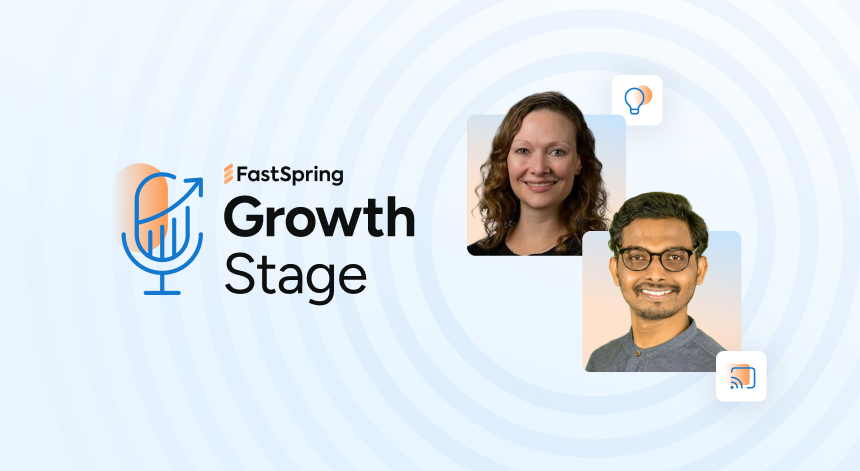
One of the fastest ways to grow your business is to expand globally, especially in emerging markets like India, Brazil, and others, but how do you successfully monetize in emerging markets while avoiding risk and burdensome compliance requirements for you and your team?
In this episode of Growth Stage, we interview Sudipto Manna and Lauren Steyn of FastSpring about their thoughts on how to approach payments and ecommerce in emerging markets, and some of the requirements needed to get access to local payment methods and currencies.
If you’re wondering how you’re going to get the most bang for your buck when it’s time for you to expand into new emerging markets, don’t miss this episode of Growth Stage. Watch or listen now!
Podcast Full Interview: Audio


Podcast Full Interview: Video
Transcript
David (00:04)
Welcome to Growth Stage by FastSpring, where we discuss how digital product companies can increase the value of their businesses. I’m your host, David Vogelpohl. I support the digital product community as part of my role here at FastSpring. And I love to bring the best of the community to you here on Growth Stage. In this episode, we’re going to be talking about optimizing ecommerce for emerging markets, not the core markets in North America, Europe, and Asia, but emerging ones with their own unique challenges. And joining us for this conversation are two folks that know a lot about this. I’d like to welcome both from FastSpring, Sudipto Manna. Sudipto, welcome to Growth Stage. Welcome back to Growth Stage.
Sudipto (00:47)
Thanks for having me, DV.
David (00:49)
And Lauren Steyn. Lauren, welcome. Have you been on Growth Stage before, Lauren? I don’t recall.
Lauren (00:56)
No,
I have not. This is my first time. Thank you for having me.
David (00:59)
Excellent, excellent. We’re so excited to have both of you here. We’re going to double click and learn more about what your advice is for tackling e-commerce in emerging markets. And for those watching and listening for a little more context, Sudipto and Lauren are going to share their thoughts about how to approach payments in e-commerce in emerging markets and some of the requirements needed to get access to things like local payment methods and currencies.
It’s more than just a desire. There’s actually some steps to go through. And these folks are going to talk a little bit about that and particularly give us some more information on particulars in certain emerging markets. So I’m going to ask you both the same question I ask every guest here on Growth Stage. Lauren, maybe I’ll start with you. What was the first thing you bought online?
Lauren (01:51)
Wow, that is a great question and I genuinely struggled to remember it for so long ago, but I suspect it would have been something like a movie ticket. Buying that through online instead of going to the cinema and buying it from there. I believe that must have been my first online buying experience.
David (02:10)
Ooh, that’s a good one. Well, what about you, Sudipto? What was the first thing you think you bought online?
Sudipto (02:15)
Yeah, that’s like an old timer. So I don’t recall the first purchase that I ever made online, but I recall a memorable purchase that I did back in 2011. And I would like to piggyback on that side because that brings closer to what we are building here and what we are doing. So my first purchase was airline tickets for my entire family. So that was the first time we as a family traveled from Mumbai to Kolkata. And that was the pivotal moment where
things airline tickets were becoming more and more accessible to common people like us. So that was the first purchase online purchase that I did that I got to recall.
David (02:54)
So what was the occasion of traveling from Mumbai? Where did you travel to?
Sudipto (02:59)
We traveled to Kolkata. It was my cousin’s wedding. And that was the first time we, the entire family, traveled together. In India, back in India, we traveled during our holidays. So that was the first time we as a whole family traveled. Usually I travel alone, but that was the first time we as a whole family traveled. It was a pleasant experience for all of us.
David (03:21)
Cool and it’s kind of interesting that both of you bought tickets you think for the first time you bought something online. I’m trying to remember how you bought airline tickets before online. That’s actually maybe a topic for another another episode. All right. Well, let’s let’s take a little deeper here. You know, we’re talking about e-commerce and payments and emerging markets. And so I just want to kind of get an understanding for both of your backgrounds. I’ll start with you again, Lauren. Could you tell me about your role at FastSpring
And what FastSpring does, I mean, I people listen to the podcast, just like, what does FastSpring do and what do you do here?
Lauren (03:55)
Absolutely. really, FastSpring is a global commerce platform and it’s designed specifically for companies selling online goods across a range of industries. One of the things that makes FastSpring unique is that we act as a merchant of record, which basically means that we handle a lot of the complexity of selling globally, know, collecting payments, taking in taxes, know, calculating the taxes, VAT and GST, doing currency conversion.
making sure that you are compliant, doing fraud management. So really all of that complexity around selling online, we take on that responsibility so that our customers, can just focus on selling the goods that they want and making that product the best that it possibly can be. And really it flows through a FastSpring checkout experience. So we’ve got a range of checkout experiences. So our customers will…
plug in our, the FastSpring checkout into their website or app and ⁓ FastSpring takes care of the rest. So that is the FastSpring side of it. So my role at FastSpring ⁓ is really that checkout experience itself. I am a product manager working on UI UX. So I work on a different number of levels, but really on the UI, making sure that that user interface is very intuitive, but also ⁓ focusing on the
the developer experience and those developer facing components that companies use to integrate with the FastSpring checkout. So ⁓ my job really is about how all these complex systems show up on that buyer journey, that end customer journey that coming through that checkout. So if I, if I would say, you know, my focus is really around how the purchase experience feels to the buyer, making sure that the checkout is intuitive, localized and as frictionless as possible.
So the goal is that when somebody decides to buy, nothing about that interface slows them down or makes them lose confidence in any way so that they can just seamlessly go through that checkout experience.
David (06:03)
Okay, so you’re coming to this conversation through this kind lens of expertise around UI, UX, localization and developer experience. And I think when a lot of people think about localizing for any market, let alone emerging markets, that’s what they tend to focus on a lot are things like language translations and like use this color in this country because of these reasons, like those types of things.
There’s of course a lot more to it and you kind of alluded to that a little bit when you were talking about what FastSpring does as a merchant or record. Basically taking on all of that complexity and compliance like do I need a local entity? What do I need to get access to a local currency? And FastSpring’s customers are basically offloading all that to FastSpring. So we’re going to talk about that today, like what you need in order to get access and the strategies you need to deploy.
But kind of as you pointed out with that merchant of record model that FastSpring customers kind of inherit a lot of those things so they don’t necessarily have to jump through some of the hoops we’re going to talk about today. But we are going to talk about what’s necessary in order to achieve that. But you’re coming to it from like the UI UX and developer experience perspectives that sound about right, Lauren.
Lauren (07:12)
Absolutely, exactly.
David (07:14)
Excellent. Now, Sudipto we already heard what FastSpring does. I’m not going to ask you that part, but what do you do here? What expertise are you bringing to this conversation?
Sudipto (07:22)
Yeah, I’m a Senior Product Manager here for FastSpring and work in the high skilled payment infrastructure with the focus on converting transaction friction into revenue growth. And most recently, I’ve been working with our team to launch certain payment methods which help our customers acquire more subscription, recording, bidding space, optimize checkout flows, have shown incremental growth and we have grown 30 % year over year. So.
I tried to bridge the gap between complex local global compliance and seamless user experience, ensuring that invisible payments remain both secure and high converting. When a customer comes in, they should not feel like they are transacting in an alien software or alien land. They should feel more local. They should feel more ease to purchase and feel secure to pass on their payment information to us.
I’m looking to bring my expertise into modular payment stacks and retention focused FinTech for a team to scale and grow for the next 100 billion customers. That’s my goal for this whole approach.
David (08:28)
Excellent. You know, it’s funny when I joined FastSpring a little over three years ago, you were one of the first people I spoke with who gave me the lay of the land about how the company and platform worked and really much deeper understanding of payments and when I kind of came into the company. And so I’m really excited to have you here today to be one of the folks I’m asking questions around strategies for emerging markets. Now, we’ve talked about emerging markets a few times, obviously, this is like the context of the podcast.
But like what does that mean? Like Lauren, what does emerging markets mean to you?
Lauren (09:03)
Right. Well, I think when people talk about emerging markets in the context of digital commerce, they usually mean regions where online purchasing is growing rapidly, but maybe the payment ecosystem is still evolving. It’s becoming solidifying. In some regions, you’ve got it in really, really very stable place. But in these evolving markets, you’ve got local competitors continuously
creating new payment methods. So it’s a lot happening there. I think that is one of the things that for me, emerging markets mean. ⁓ So in practical terms, that could mean a few things. So maybe credit card penetration might be lower and local pevin.
local payment methods are more dominant. Yes, so I think from a product perspective, emerging markets aren’t just about geography, they’re about payment behavior. To give you an example, if you only support international cards, you may unintentionally be excluding a large percentage of those potential buyers in those emerging markets. And I think this is one of the real challenges that global merchants face when they are trying to go after those emerging markets.
David (10:18)
It is an interesting point that this idea of emerging markets is relative. And what we’re talking about is the ability, capability, and I guess the frequency of people buying online and how they do that and how you as a company are going after these customers and what you’re offering to them and considerations, like you said, around credit card penetration, local payment methods.
and other aspects of that commerce journey and payments journey that would be specific to that market, which is going to be different maybe than your core markets if you’re focusing on say North America, Europe, and certain parts of Asia. So I’m just curious, like Sudipto, and I’m particularly curious from your perspective, why is it important to localize commerce for emerging markets? Like if I’m trying to get into India or where you’re from or Brazil or another place that might not be one of my like…
primary markets I’ve already kind of been focusing on.
Sudipto (11:16)
Yeah, that’s a great question. And I can certainly put some color on both India and Brazil, both of the regions which where I have exclusively worked on. So both Brazil and India have a huge young population. So if you look at the
top markets or top growing population, both India and Brazil have a plethora of young population. A younger digitally savvy population, Gen Z and millennials seek convenience and personalization without the long term liabilities of ownership. So that’s where we see a tremendous growth or influx of customer base coming in from. Now this market existed to be sure, like they existed well before the pandemic. What happened?
post pandemic, see a ⁓ shift in the bio-to-purchase phenomena. Both these countries have built a local regulatory system which offers this regional payment method, which in terms like are well beyond the traditional payment rates like cards or pay balance and things. So when we look at Brazil and India, we are looking at a huge population which relies on a strategic payment method which is backed often by the government.
So those are the regions why we, FastSpring try to explore into those regions and try to offer a regional aspect to our checkout flow. Be sure this customer existed, they were not purchasing anything digitally. Take an example, I, as a consumer, when I purchased my first ticket, it was back in then. Prior to that, I still used to go to the airline counter and buy my tickets using cash. So things are changing.
the landscape is changing. There’s a rapid user growth and the customers are looking for a trusted partner. In this case, the partners are the government backed payment methods like UPI, like PIX which are very close to customers and customers can actually use those payment method and have a solid trust in the system. So that’s where when you talk about merging markets, people are looking for trust.
People are looking for growth. People are looking for reliability. And those regional payment methods backed by the government source actually do those things for the customers.
David (13:35)
So UPI is a government backed payment method in India. Is that correct? And then PIX is like the Brazil version of that. Is that sound fair?
Sudipto (13:40)
Yes, that’s absolutely correct.
Yeah, yeah.
And I’m glad you brought those things up and I’m responsible for launching those two payment methods ahead of FastSpring And I can safely say that those two payment methods have a tremendous impact in our customer base and how we see customer transactions act, be it the approval rate, be it conversion, be it new user acquisition. All those things have shown a huge shift in our traditional product launches. And I’m
I’m excited about the future and growth of this payment methods.
David (14:19)
You know, it’s funny when FastSpring first launched PIX, I was on a ski trip, I can think it was two years ago, around this time around spring break. And I got on the lift with someone from Brazil and I was like, Hey, we’re launching PIX in Brazil. And he’s like, yeah, you better because like everyone in Brazil uses PIX and not everyone necessarily has a credit card. And like that really hit home to me because to me that’s like maybe one of the reasons it’s so important.
It’s because my perspective as an American who’s lived here my whole life is everybody’s got credit cards, right? Some form or another or debit card. And the reality is that’s actually not true in every country and places like India and Brazil. The majority of people, the overwhelming majority of people are using these government backed digital payment methods, I guess, for lower fees and convenience and all kinds of reasons, but it’s just different than what I experience here in the US. Is that fair?
Sudipto (15:18)
Yeah, that’s absolutely fair. And I think there’s this psychological shift also. People are more keen on using, which is homegrown. When I look at, and give you an example, like when I go back to India, there’s this whole nationalism and pride going on. Hey, I want to use PIX or I want to use UPI. So that’s the narrative that is going around and making people comfortable in using certain payment methods, which are region, which are backed. And I think…
If I look at the amount of UPI is by far the most important payment method back in India. If you are offering anything in India, it has to be offered or you have to offer UPI. You cannot do business without offering UPI back in India. That’s the reality. And same goes with PIX also. You cannot, the person whom you met on the ski, he is definitely giving it a picture of how things are evolving and we…
sitting in the United States, we just think like, hey, why don’t the customer have access to credit card? Because it’s not the norm out there. Doesn’t mean that everybody should have a credit card. It’s totally fair for other people to have their preferred payment method. PIX and UPI seems to be one. And when we scale up and go to other emerging markets, that’s the case. That’s the scenario. That’s the lay of the land that we’re dealing with.
David (16:43)
Thanks a lot of sense and you know, I actually have done go to markets in India without picks and I would imagine they would have done a lot better had we included that. I don’t know if they were available at that time. That’s very like five years ago or so, but that seems like it’s an important part of it. So Lauren, I want to go back to you though for a minute and talk about like what are the elements that you need to localize for a specific country or region within your commerce engine? We talked about.
local payment methods, but what else do we need to worry about when we think about localizing for emerging markets?
Lauren (17:17)
Yes, absolutely. And you even mentioned, you know, the obvious one earlier, the language, you know, that is at the most basic. want to support the languages that those local users will be using the currency as well. Seeing a language that you understand and the currency that you are used to using just builds that trust. Really the elements should always follow the principle of, want to create trust and confidence in this checkout experience. You know, these layers, there are several layers. we’ve
got the language, the currency, and people want to see prices and instructions in a format that they immediately understand. Then there are slightly more subtle details. Once again, we’ve already gone through the payment methods displayed in that checkout. What they should really reflect, the payment methods that those people in that market are actually using. And even beyond that, show those logos of those payment methods very clearly so that they’re familiar logos. So it’s all these little…
visual trust signals that you need to build up, you know, and reduce that hesitation. And then some of the more subtle ones are the form design. When we come in from a more Western perspective, we have forms built in a very specific format, first name, last name first, and then billing address and so on and so forth. Not all markets follow that form design. So address formats, phone number fields, even name ordering differ across countries. You really should do your
your research on those local markets that you’re going after to make sure that your forms are flowing in a way that is natural to that market that you’re going after.
David (18:54)
Yeah, I know that’s such a great tip and I think that scenario people don’t think about is the form format. think a lot of people will pick up on like, you know, especially if you’re coming from like a US perspective, like the date format is going to be different than the rest of the world for whatever reason. And I really liked your tip around thinking about the default payment methods you’re showing. Shoppers and users when they’re kind of interacting with your checkouts and like if you have these local payment methods, making sure they’re visible and not like.
hidden down in some deep dark menu where it’s like hard to find. I think that’s another like less than intuitive thing that people think about with localization.
Lauren (19:33)
nailed
it 100%. I would say the last thing that people sometimes underestimate is and that is critical, absolutely critical, is how you present taxes and then the totals. They are different across different regions. In some regions, buyers expect the tax to be included in the price, while in others they expect them to appear separately. You’ve really got to cater to that. So giving full transparency
within the expectations of that market of the pricing. It’s going to build trust. If they say that they’re going to buy something and then at the last second they see a different price, it immediately breaks that trust. So really in a nutshell, know, localization is really about making sure that when someone opens that checkout in that market, it looks and behaves like something that is built for them, not something that is a bit jarring and imported from somewhere else.
David (20:28)
You’re giving me memories of travels to places where the tax was included in the price and how great that felt to not have to worry about the surprise extra total at the end. When it comes to localizing, I often talk about a crawl walk run and I like to think of like commerce as like the crawl even where like you can offer local payment methods. You can offer ⁓ you know, localized checkouts that are easy for local populations to use.
even before you localize your website by language or you localize your support by language, do you think that’s fair to think about it in that sequence where like localizing commerce could actually be like the first step to breaking into a new region?
Lauren (21:12)
I think you could definitely work from that way and then backwards. As a matter of fact, it’s probably simpler to do it that way.
David (21:20)
Yeah, that’s kind of the point I make. I mean, I’ve used this in the past when expanding globally at other companies is like localizing commerce first, then language, then platform and support, which are like the much more complicated pieces, I feel. But it’s good to hear your perspective on that.
Lauren (21:37)
I like that. Sorry to interrupt. just want to say I really like that and it’s flowing backwards. if you’re starting from that endpoint and flowing backwards, you also, and this is kind of another one of those UI UX tips is build for consistency. So start at the end point and then you can create the consistency into the platform at the back.
David (21:57)
Yeah, love that. All right, Sudipto, so I’m going to kind of come back to you. What are the unique challenges with getting access to local payment methods and currencies? Like we talked about how there’s these government backed methods like PIX and UPI. But what do I need to get access to that? Do I get like a bank account or like open a business? What do I have to do?
Sudipto (22:22)
Yeah, that’s a great question. you think of expanding your business globally, then you are met with multiple challenges. Getting access to a payment method in a developing country requires you to deal with multiple different financial and government institutions. It’s not one piece. You have to deal with financial regulators, the fintechs, the government authorities, and so on and so forth. And each and every one of them have their own model to complex rules and regulation. So when we think about opening a shop,
Now you’re dealing with, hey, which department do I need to go to seek for a license? Which department should I go to seek for the clearance on my shops? So same thing happens when you try to expand into a global market. You need to think about, hey, if I want to offer this payment by the way, that is the bread and butter for me to expand and grow in that market. What are the different things? Things can be like setup, onboarding. Are you doing the KYC and KYB for each NMD buyer?
David (23:18)
What does this mean? I’m sorry.
Sudipto (23:20)
Yeah, KYC would be know your customer, know your buyers. So are you doing the know your buyer, know your customers for each and every financial product that you’re trying to sell. So that will be the first piece. Every time we speak with a partner or an entity back in a developing country, that’s the first question that they are asking us. Hey, are you doing your KYB KYC or are you or do you have a local bank account where we can fund the settlements? Do you have all the rights and regulation to deal with it?
here at Foshpring, we take front load all these aspects for our customers and make sure that our sellers or our customers don’t have to go through all this regulatory process, don’t have to go through all this setup process to ensure that the FedEx or the partners with whom they are working globally, let’s say in India or in Brazil, they have to deal with it. It’s a complex product. If I may, I might give you some examples like
bigger Western companies, they have to close down their business back in India because they could not meet the specific requirements. So what we are trying to do is we are trying to tiptoe and work with the partners and institution to make sure that we follow all those rules and regulation and have all the rights instrument in place to ensure we acquire and we can process the payment for our customers. So if you go alone,
there might be lot of challenges on the way, but if you come with offspring, it will be a smooth sailing path forward for you. Sorry, I it, but that’s the reality.
David (24:53)
Yeah. And you’re on a fast-spring podcast. I don’t apologize too much for selling the benefits of fast-spring here, but it’s so like, if I’m doing it on my own though, right? I can build my own and manage my own payment orchestration layer. can run through my payment service providers and do credit card processing. can figure out the bank account legal requirements of local payment methods and, configure that into my orchestration layer and manage and maintain all of that on my own.
And I can also offload it or outsource it to providers like FastBringing and that reduces that complexity. But getting access to that local payment method comes with some extra hoops to jump through that you might not be familiar with. You’re going to have to get familiar with that country that you’re trying to break into. And then you’re going to have to bring all of that and figure out how to manage it if you are doing it yourself. But these are some of the requirements that you have to jump through some of the hoops you have to jump through to make that happen.
I think that’s helpful for people to understand like how that works in the grand scheme of things, even if they choose to offload or outsource to a provider like fast bring. So I really appreciate you kind of walking us through that. Lauren, I’m just curious from your perspective. What does bad look like when I do business in emerging markets like you talked about like what good looks like from like the UI, you actually inflation, all this stuff. What is bad?
Lauren (26:16)
really, it’s the same concept just in the reverse, right? It usually looks like the checkout that works technically works. It does everything that it’s supposed to, but it clearly wasn’t designed for that local user in mind. And we’ve gone through a number of examples where they may not support the currency or the language or the payment method. And I think in particular, the most…
The worst thing you could do is not support the main payment method because in some markets that instantly excludes a large portion of the potential buyers. So, ⁓ and I think that another, another one is what, what issue is interface friction. Things that slow the checkout pages down. So it might be confusing form fields or a heavy checkout with number of steps to go through. know, Siddipto alluded to this earlier where in some of these emerging markets,
You’ve got users mostly on their phones and they need a light touch and quick checkout that can, you know, just one, two, three clicks and they’re done. So, you know, especially in regions where the connectivity is not necessarily very good. So you want to, ⁓ you know, really reduce that friction as much as possible. Because any friction friction that you add to a checkout, any additional input fields that are not necessary, any clutter. That’s bad. You want to just get that, ⁓ buyer with that.
end customer focused on checking out as easily and as quickly as possible.
David (27:46)
Yeah, that’s really interesting that you bring up page load time in emerging markets. There is a gentleman I got to know who created one of the famous web page test tools out there. And he had created it at a time back in the AOL days when AOL engineers were testing page load times, but they were testing it from like inside the data center and they were like every web page loads great. And he was like, no, you got to test at the other end of a dial up line at that time.
And I know that we’ve gone through phases of that here at FastSpring where like we’ve optimized based on page load times in specific regions. And that’s actually one of our claims to fame is how well we do at page, flip my notebook up there, how well we do at page load times in these emerging markets. And I think that’s a thing a lot of people miss when they’re thinking about getting into PIX or India, like maybe they’re using a CDN, a content distribution network or.
Maybe they have localized hosting or something, but they haven’t really paid attention to their load time in that market. Is that something you’ve seen a lot of? You know, you brought it up there, Lauren, or don’t know, Sudipto, do if you have any thoughts on that on the infrastructure side, but is that a common miss that people do when they start focusing on emerging markets is like testing their speed in that market.
Lauren (29:03)
It’s definitely a common miss. you know, this is partly why we at FastSpring spent a lot of time and energy getting much more accurate measurements and then from there optimizing for those local markets. And we really did see the load times differ quite substantially across those emerging markets. And really, when you’re talking about load times, the
The golden number is almost two seconds. It’s not necessarily achievable, but that is you don’t really want to go much over two seconds. You just want that, you know, that seamless experience. As soon as it goes longer than two seconds, people start wondering, what’s going on here? And that’s where the conversion starts dropping. But it’s definitely something that you need to put some thought into how you can measure the load times in different markets. And you have to put a lot of energy and time into it. So I think that is a lot of companies then.
maybe to make shortcuts or maybe they don’t even realize they need to do that. So ⁓ we can definitely help on that side.
David (30:02)
Yeah, that makes sense. The other thing I’ve seen in the past is people say things like, oh, well, you know, in India, most people don’t have computers, so you need to optimize for mobile. And what I’ve also seen is people don’t necessarily pay attention to their own traffic in that emerging market. They take that little nugget of truth they learned and apply it. But then they sell like downloadable software for PCs. And it’s like, well, yeah, but.
all your customers or most of your customers are probably visiting from a PC. So like looking at your own analytics and determining like really what devices should I be doubling down on. There’s another myth I’ve seen people do when they take these little factoids about a country and then, you know, try to apply that to reality. All right, Sudipto, I’m going to ask you next, because I know this is like something you’ve been working on, if offspring launched UPI subscriptions recently.
Tell me about that and what special considerations one might have with subscriptions in emerging markets. Is there a special set of considerations for subscriptions when attacking emerging markets?
Sudipto (31:04)
Yeah, David, thanks for asking. Yes, we launched UPI AutoPay in India recently and we see a strong adoption there. And let’s take a step back and tell you more about subscription and how things are working in India. There’s a psychological shift in affordability amongst customers. So consumers are increasingly prioritizing access and flexibility over ownership. This is reflected in the own less experience more motto for the millennials and the
urban population. This is close to what I have experienced and I would like to give a small example. Subscription is not new to India. It has always been part of our culture. We have subscriptions for the regular milkman, we call it the doodhwalas, the newspapers and so on so forth. What has changed is we have moved all the subscription away from traditional offline channel to online channel.
and UPI being the most dominant payment method is basically shifting that entire offline traditional cash based payment to digital online payment. And no matter whether you’re selling a physical goods or a digital goods, UPI is bread and butter. If you think of any scenarios where you know that the customer will subscribe to this product and they would like to use this product, you have to offer UPI AutoBee. There is no other way around or else
you will rely on somebody who has already left the market 20 years back, like me, who has left that market, the inner market 15 years back when I moved here. So, U-Pay AutoPay is a great product and the psychological shift is basically driving all the customers in India to adopt to more, like adopting to own less and experience more and more too.
David (32:55)
You say that a consideration though, maybe India is a bad example for this, but are there other markets or even populations within places like India where they’re not ready for subscriptions yet and you should consider like a prepaid model instead? Is that another thing to think about when breaking into an emerging market?
Sudipto (33:14)
Yeah, absolutely. There are tons of market where subscription is not the way to go. So I’ve closely working with customers or partners in China and other South Asian countries. And those markets are again, huge market when we look at the customer base, but they’re not very keen on using the subscription model. They are very keen on, hey, if I want to use the product, I will pay for the product at that point of time. They are more savvy towards make it simpler.
the thing that Lauren brought up. Load it quickly, make the load times faster than possible. Also, they’re like, hey, I know what I want. I don’t want you to auto charge my payment method because I want to have more authority over the payments that I’m trying to approve. If you look at China, if you look at other Southeast Asian countries, they’re more reserved towards the subscription approach. They’re more inclined towards make it secure, make it faster for me.
Let me take a step back and think about my subscription auto recording purchase for a while.
David (34:18)
Yeah, and I know different countries have had different like surges of sentiment for and against subscriptions. I know that’s a challenging dance. Is there also like regulations and laws you got to pay attention to with stuff like that?
Sudipto (34:31)
Yeah,
that’s a great point, Devi. The regulation is also one thing that drives the payment partners like us to ensure that we are not tipping on some regulatory cleaves or some regulatory challenges. There are multiple countries and some of them are coming up in EU also where they are promoting more one-time purchase rather than subscription purchase where they want to give visibility to customers about how much money and who is going to collect from you. So they are more…
the inclining towards. If you do one-time purchase, we know that who is authorizing the payment and when the charge will be. But for recurring purchase, because that happens, it’s an invisible passive income, right? So that happens behind the scenes. So as a customer, I have less more clarity or less more visibility into when the charges will happen. So certain governments are taking this approach of only pursuing the purgatory product. The motto is, if you want it,
you pay for it at that particular point of time. You don’t have to set up and forget it.
David (35:33)
Yeah, that makes sense. Lauren, what about from your perspective? Are there any other considerations folks should think about when thinking about subscriptions in emerging markets?
Lauren (35:43)
think Sadipla raised a really good point about the regulations and the one thing that I keep seeing is that these regulations are evolving continuously, you know, and coming into law and you have to respond, you have to be quick and you have to keep up with that. And it’s absolutely, as Sadipla said, it’s all going towards that transparency of what exactly you are buying with the subscription, what are the charges going to be.
So you really just have to keep your pulse on all of the markets that you’re working within and make sure that you’re up to date on those regulations and adapt accordingly. That is one of the things that we do at FastSpring is we are constantly scanning what are happening in the different regions, in the different countries, and making sure that we update our regulatory, whatever it might be, but elements.
so that we keep our customers safe so that they can just continue to sell through us safely and within compliance.
David (36:47)
So if I have built and maintained my own payment orchestration layer, it’s more than just like seeking some product managers to research how to do it and be compliant initially. I have to then implement all that the right way and to keep up with it and modify it over time.
Lauren (37:06)
Absolutely. Yes, that maintenance is a large piece that is continuously ongoing.
David (37:14)
Yeah, and it’s interesting to think about it from the compliance perspective. And I know people get, you know, kind of freaked out about fines and stuff like that, which obviously is concerning. As a marketer, I think about conversion rates and like if I’m delivering an experience my customers aren’t expecting or aren’t used to, and obviously that’s going to have an impact. And I might walk away from going after emerging market thinking like, geez, it didn’t work. I guess that market’s not for us. But the reality could have just been I was bad at localizing that.
commerce experience, which I think is a really interesting perspective you guys have shared kind of throughout this interview. So now I’m going to ask you both the same question to wrap this up here. Lauren, I’ll stay with you. If people just remembered one thing from what we talked about today, what should that be?
Lauren (38:01)
It’s really what I’ve been saying all the way through the interview, which is don’t assume that you know the market that you’re going after or the customer within the market that you’re going after. What is tried and tested in a well-known market, you cannot shift and lift that to a new market. You have got to do your due diligence. know, a company might do everything right, have a great product, great marketing, global reach. But if the checkout experience feels unfamiliar or confusing, people simply won’t complete that purchase.
David (38:32)
That’s a great one. What about you, Sudipto? If people only remembered one thing today, what would that be? Should that be?
Sudipto (38:38)
Yeah, for me, it will be the psychological shift. It’s happening, which is opening up new opportunities. As long as the products are affordable and meet the customer demands and you make it affordable and easy to pay, you will find customers. When I say affordable and easy to pay, I’m leading towards offering local payment methods. Do not expect or do not wait for someone to tell you that the market is evolving. Look around, do your due diligence, and you will soon see the markets which are opening up and
where you should focus on. At Am, Africa are two big examples where I believe based on working on this whole portfolios, we see there are a lot of opportunities and we truly believe the customers are there. We need to just position ourselves in a way that it becomes easier for ourself and our customers to be enhanced. We are focusing on those regions more.
David (39:35)
Excellent. Well, thank you so much, Shadipta. Thank you for being here today.
Sudipto (39:39)
It’s always pleasure to be with you, DV and Lauren.
David (39:42)
Thank you, Lauren, as well.
Lauren (39:45)
Thank you so much for having me.
David (39:47)
If you’d like to learn more about what Sudipto and Lauren are up to, can visit fastspring.com. Again, thanks for joining us here for Growth Stage. I’ve been your host, David Vogelpohl. I support the digital product community here at FastSpring as part of my role. And I love to bring the best of the community to you here on Growth Stage.