Buyer Support
 Seller Support


Small app teams are told to test everything, monetize everywhere, and build the perfect onboarding flow. But when you’re lean, doing more usually means doing everything a little worse. So how do you decide what actually moves revenue, and what to ignore?
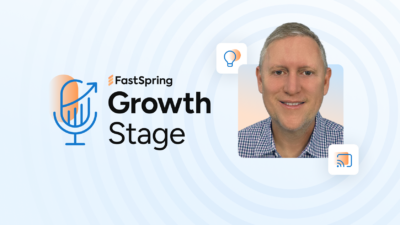
In this episode of Growth Stage, we interview Antoine Rondelet, co-founder and CEO of Ganddee, the app that helps people discover secondhand and charity shops near them. Antoine runs a two-sided marketplace with a small team, selling to both consumers and businesses, and he’s here to share what he’s learned about:
- Why consumers and business buyers need completely different checkout experiences, and where web checkout fits in.
- How to price for small, budget-conscious buyers who don’t know your brand yet.
- Why he deleted his onboarding entirely, and what replaced it.
- Where AI and automation help a small team, and where they quietly add complexity.
If you’re a founder or growth lead building a mobile app with a lean team, don’t miss this episode of Growth Stage. Watch or listen now!
Podcast Full Interview: Audio


Listen online or find it on more podcast services.
Podcast Full Interview: Video
Transcript
Jesse (00:02)
Hello everyone, welcome to Growth Stage, a podcast by FastSpring, where we discuss how digital technology companies grow revenue, build good products, and increase the value of their businesses. I’m your host, Jesse Paliotto. Love being a part of the community. I get to do this as part of my role at FastSpring, which is awesome. I love bringing the best of the community to you here on the podcast. Today we’re gonna talk about selling more, even when you do less, some lean monetization lessons for mobile apps.
Small app teams are told to test everything, monetize everywhere, build a perfect onboarding flow. But when you’re lean, doing more can end up sometimes meaning doing everything a little worse. So, how do you decide what actually improves revenue, what to ignore? So, to answer that question in this episode today, I get to interview Antoine Rondelet, co-founder and CEO of Ganddee the app that helps people discover secondhand and charity shops near them. Antoine runs a two-sided marketplace, which is very interesting to me.
With a small team selling to both consumers and businesses. So we’re gonna talk about why consumers and businesses, business buyers need completely different checkout experiences, pricing for budget conscious buyers, whether to onboard or not to onboard, which is kind of a conversation that he and I have had a little bit before. And then where AI and automation can help. So if you’re a founder or a growth lead building a mobile app with a lean team, this will be right up your alley. Antoine, thanks for being on the podcast today, man. This is great.
Antoine (01:24)
Yeah, thanks for having me. It’s pleasure for sure.
Jesse (01:26)
Last time we talked, so Antoine and I got to be on a panel together at a trade show in London about a month ago. And I asked him this question once. So I’m gonna ask him again just to get us started today, which is what is the last app subscription that you canceled or signed up for? If there’s nothing you wanna say that you canceled, like e either one. We’ll take either. What’s what’s what’s the latest?
Antoine (01:46)
All good, all good. I’ll I’ll talk about cancellation here. the last one I canceled is CapCut. I cancelled it because I’m doing a lot of editing straight in the TikTok app. So CapCut wasn’t really worth it for me anymore. so yeah, that’s that’s the one.
Jesse (02:01)
The danger is that the the platform starts to build in the future that used to be your own app. Apple’s been taking those for decades at this point. but let’s talk about Ganddee for a little bit here. So take us back to the start. When did you see, or what did you see in thrifting and charity shops that made you want to build Ganddee? and then the interesting part is like, how did you get both shops and shoppers on board and get this thing going?
Antoine (02:27)
Yeah, very interesting, very good question. So basically Ganddee started off as a bit of a personal pain point. So I’m French living in London. London is a great city. You have a lot of things going on. if you like thrifting, you have carboot sales, aka yard sales, maybe in the US. Yeah. you have flea markets, you have charity shops, which are like the thrift stores, like the Goodwill’s equivalent in the U in the UK. So there’s a lot going on.
But it’s not always easy to know where to go. So especially with regards to the events. The events come and go on a regular basis. So if you like thrifting, you end up having to jump from Instagram stories to Facebook groups to Evan Bright to Google. Like it’s just all over the place and you end up missing out. So my realization was okay, it’s a bit of a pain. I love thrifting in real life. When I buy things secondhand, especially second hand, right? I I love to touch them, I love to try them on.
You know, like to see if they size me well, if the fabric fits me. if I buy a second end coffee table, I want to see if it’s damaged, if it’s to the right color. So I’m really much an in-real life person. And you have a lot of online platforms allowing you to buy online. I love them, they’re great, but I prefer in real life. And I realized there wasn’t such product allowing me as a as a thrifter in real life to basically do what I love so much easily. So it it was really a personal pain point.
So I started as a tech guy to put everything on a map. I built like a web app originally myself. and so I started to put all the charity shops and the local events I was aware of around me. I visited a lot of shops telling them about what I was doing, listing them for free. So I’m channeling into the second side of your question here. you know, kind of listing people, listing shops and and and events in in good faith for free without asking them anything. That was
what was making the like the first version of Ganddee, which wasn’t really named back then, kind of useful for me and for people around me. and then I realized, though, I’m I’m not the only one who actually loved to thrift in real life. The more I talked about it with shoppers, the more I talked about it with like shop owners, etc. I realized, okay, well, there’s actually a an entire segment of the segment market that’s in real life. That’s yeah that’s not going anywhere. and that’s actually becoming more and more popular.
I especially in the post-COVID era when people started to go back out, you know, like they were chronically online for many years, locked inside of their houses, and they were wanted to go out again. And I really realized, actually, I’m not the only one. There’s probably something to be done there. So this is how it kind of morphed into a more serious project. And so, yeah, like the two sided aspect of the marketplace makes it challenging. So, first setting like listing people in good faith.
giving utility to the platform because if the map and if the app itself is empty, like any marketplace with no product, with no inventory is useless. So you need to get the inventory. And in this case it’s the shops, the events, et cetera. And once you start getting enough traction in this, then you can start acquiring more users. And so then you have to jump from one side to another. So first what we did is we focused on a small area of London around shortage for people who know London London.
There are lots of in-tech shops there. So I started off by taking my my backpack, putting my shoes on, knocking on every door of every shop in Shortage High Street and in in East London to list them. So I went to see the owners, I was like, hey, I’m building this thing, like I’ve listed you just now, you’re there, da-da-da. Giving them some leaflets to tell their customers about us. So they were very happy about it. And
Jesse (06:07)
Yeah.
Antoine (06:07)
once we started to really get every shop in East London.
Like every vintage shop and event in East London on the map, I spent a lot of time in the street giving people leaflets and so on and so forth. And then we expanded outwards. So then the challenge was acquiring more users. For that, I went to university events, talking to like whoever wanted to listen to me. I went to industry events to meet sustainability professionals and people that were likely to resonate with my with my with my thing. I went to
car boot sales, flea markets, shops, I spent literally my days there talking to their customers to acquire them on the platform. So talking to people when they left the shops to say, like, hey, you can leave a review on Ganddee, hey, you can do this, et cetera, et cetera. And then I started to do a bit more TikTok. So then try and get more people on the platform. And the important part for what we did is if you really want to scale the marketplace, either you have infinite money, so you can hire people a bit everywhere to be on the ground in the street and doing like
kind of onboarding of users and and shops or and that’s my favorite way you need to lead with the community you need to empower your users to help you grow the platform themselves so what we did is we we did a bit like Waze like the driving app where people can report accidents as they drive along the road so Waze is giving you a platform and as a driver you are the one telling when there’s police when there’s an accident so
the Waze team doesn’t do this. It’s like drivers do this. I did the exact same with Ganddee. If you’re a thrifter and you realize that your local thrift store, your local event is missing on Ganddee, you can list it in two clicks. We built some tooling as we grew as well to verify that the listing was legit, et cetera. And then it was listed there. So it was a great way for our users then to tell us about missing shops.
Then we listed missing shops, then we contacted the shops to tell them, hey guys, you’ve been listed by your customers there. And this is how kind of both sides started to attract each other. So yeah. At the beginning was a lot of in-real life stuff that don’t scale at all. And once you start getting some traction, you can try and make sure each side are kind of attracting each other.
Jesse (08:15)
Yeah, that’s really interesting. Like you need to like get things going with the shops to attract the people. And then once you have more people, that becomes attractive to more shops because now there’s an audience you can pitch to them. But yeah, the Waze thing is really smart, like starting to make it almost micro and crowdsourced. Like you guys start to populate the the inventory in the app. it’s just a really, really clever thing. And funny enough, I mean, like way back in the day, Facebook, that’s what they were doing with universities, is just
start local and you know look at the scope. just for folks that are listening, like can you give kind of a quick picture of just what is your footprint now? I believe it’s UK and Ireland. And then what’s what’s next?
Antoine (08:54)
Sure, yeah, definitely. So we are all around the United Kingdom. so Wales, England, Scotland, and Northern Ireland. And we’ve also launched in the the Republic of Ireland. you know, like big cities like Dublin, etc., we are everywhere now. we have around 15,000 shops and events listed on the platform. To the best of my knowledge, this is the most comprehensive directory of
in real life sales and shops, and second-hand shops. I don’t know any directory that’s more comprehensive than us. and yeah, we’ve been spreading pretty well. So this is funny, you know, it started with kind of like me knocking on doors and try to, you know, get these things off the ground. And last year, 48 hours after launching the Republic of Ireland, we were number one app on the App Store. Whoa. That was pretty nuts. Yeah. That was that was pretty crazy. And and
the reason we launched Ireland is because on TikTok, when we started to do more content and tell them about like the shops we have listed on the platform and so on and so forth, you know, TikTok doesn’t have borders. So it’s suggesting your content to a bunch of people. Of course, people that are likely to like, et cetera, right? The LG does its job. But given that the Republic of Ireland is an English speaking country that’s very close to where we are,
Our post ended up probably being suggested to people living there. And they were like coming in our DMs and in our comments. Can you launch Ireland? And so we started to get a wave of people asking us this. We’re like, wow, that’s pretty crazy. So we decided, okay, let’s give it a try. And yeah, 48 hours later, we we were number one there. So that that’s been pretty crazy. and yeah, what’s next? launching in other countries. we literally want to be everywhere you want to travel.
and we wanna be your guide for finding amazing second end places wherever you are.
Jesse (10:37)
Come to Los Angeles, we need this. We got so many of these shops, garage sales, all those things. And yeah, I don’t know what the universal index is for those here. So come on over, man. so you have consumers and businesses in the same app. Can you talk about like how do they buy differently? Maybe talk for a second, even about like how are you doing sort of monetization for the two sides of the marketplace and then how do they differ?
Antoine (11:07)
Yeah. It’s a great question. So I mean they buy very, very differently as as you might imagine. So I guess like users come on a on a on an app and regardless what you app is people probably have a I mean they have a a Google Play account, they have a an I like an Apple an Apple account, so they probably have their card linked to it. And I mean if you really want to offer the path of least resistance.
You can just get the usual kind of like a payment flow that does like face ID or anything, and then you pay through the the payment rails of of the platform. of course you have commissions, etc. So depending on your stage as a company, it may make sense or it may not make sense. But I guess for us, it makes sense to just follow the path of least resistance and try to give people the easiest way to pay.
So people can pay for various set of things. it can be like premium functionalities in the app, unlimited specific like searches, or you know, it can be a bunch of of things. and for the shops, it’s it’s very different because as a shop owner, you come and like the card that is linked, for example, to your Apple account is your most likely your personal card. So if you want to do a purchase as a business, it’s actually a
pretty bad checkout experience to force businesses to pay through Apple Pay or something like that. I mean people may not have their company card registered on their on their Apple wallet or something like that. So it’s it’s really a pain. So in this case, you have to think about what’s the well first you have to talk to your customers and understand how they proceed. And what we realized is the best thing is to do a either an app to web, bring them on the web, and then they can enter their card details manually and
You know, they are fine, or send a payment link to their to their colleagues from the financial department who’s gonna be paying. or just like web to app, like depending where you onboard them, you can onboard them straight on the web, they pay, and once they have paid and the account is created, you then you say, Okay, now you can actually start using the app, etc. So yeah, it’s it it all depends on your customers and their and their habits. And the best way is just to talk to them and realize well.
Listen to them. They will tell you what they need and how they proceed. And then you just need to find the best payment method for this.
Jesse (13:32)
Yeah, yeah, that’s really interesting. Like, cause obviously with sort of an end consumer is trying to make a dis or you want them to make a decision quickly with the least amount of friction, then just hit the Apple Pay button right away. But yeah, business buyers are more complex. There’s more stakeholders, which is kind of that last comment you made about like if they’re going to send it to their financial team, then they need to log in and pay. And so yeah, having more both app to web flows where you’re saying leave the app and go to this place where you can do this more.
slightly complex transaction and thoughtfully, or web to app where you’re you’re bringing them to a web page and then finally sending them over where they transact. Yeah, that totally makes sense. can you talk about like what are the like how do you think about pricing when customers are small and budget conscious and maybe even versus businesses where they have a different set of sort of financial metrics that they’re working with.
Antoine (14:24)
Yeah, great question. So I mean for us it’s a constant experimentation, by the way. Like almost everything we’re talking about today is constant experimentation on our end because some things can be true today that are going to be false tomorrow. So I don’t have like a like a one clear cut answer, but for us pricing is something that, yeah, I mean, again, it depends who your customers are.
if you want to if you want to work with ginormous like second end chains, for example, like these guys are not that price sensitive. I mean, they do have huge marketing budgets. even though they may be like their second-end operations may be related to charity work, like financing charity work through their retail locations, they still have pretty large marketing budgets. So they’re they they are not that price sensitive.
If you want to work with small family run business or like yeah, people organizing garage sales like on like just as a side gig on the weekend or something like that, that might be a different thing. So once again, it depends how do you want to tailor your product and for whom. And then you can you can have different plans, right? I mean, you can also you can have a like a starter plan starting for a few dozens of pounds a month or something like that. If you want to have a subscription model.
Then you can have like a middle plan to accommodate for like mid-size chains, like maybe networks of like four, five, six stores. And then you can have like an enterprise plan for the very large retailers that’s that that that really can afford like a more expensive solutions. So I guess having different plans is always a smart move. because you can you can then appeal to different audiences.
And then you can also play around with credit stuff. I mean, this is something we see a lot in the with with AI now. credits everywhere. But this is also another thing. if you have some usage based kind of product on your app, you can you can use like credits for this. And then that means that well, whoever uses the the app most is gonna be is gonna be paying more.
And if you have a tiny budget and you barely use the app, you’re gonna pay bare barely anything. So yeah, I guess you have to try, you have to figure out what you’re selling to whom and offer different possibilities for them so you can appeal to everyone any budget.
Jesse (16:48)
Yeah. Yeah, that’s great. I mean, it feels like such a sort of foundational marketing concept. Like you gotta test, you have to segment, and then you have to sort of build the marketing messaging, or in this case the pricing and the plans that speak to your segments. it is inter like I you got my brain going on the just like ever there’s usage based billing everywhere now and there’s you know tokens and credits everywhere now and yeah, like how does that translate through to non AI models but into other
app and digital technology businesses, like how can you do usage based billing? that’s interesting.
Antoine (17:22)
I mean, yeah, mean, I think I think people can get really creative. Like obviously every project is different, so every monetization strategy will need to be adjusted based on the product, but usage isn’t slimply related to to AI. You know, I mean if you have a search bar, like Google could be usage based, if they I mean that would be not a very smart move to make. But the point is if they really wanted to monetize search.
like basic search without AI overviews or something like that. They could just say like you have 10 free searches a month. Like a search is a resource. And you would say like and then you have a counter going down to zero. And once you’re zero, it’s like pay to unlock more. Like you could find usage based kind of patterns in many different aspects of your product. Now the question is it is it smart or not? It’s it’s in many cases not smart at all, but you could do it. So I think
Every project can can look into this. and in some cases it can be nice because then you can appeal to a very large audience. If you have a power user who might not be able to live without your product, you might be able to monetize a lot. But if you have a bunch of very low intent users that are coming once every six months, etc., then and might not be willing to pay like a fixed subscription or something like that, then they may want to pay like a
one or two pounds here and there to do the two or three searches that they wanna do on a you know on a bi yearly basis. So it all depends. Yeah.
Jesse (18:56)
Yeah, and they almost you get these fine gradations of the plans. Like you basically opt into whatever micro level of a plan you want just based on your usage. let’s let’s let me turn a corner for a second because one of the things we kind of talked about in setting up the episode just a few minutes ago was around like lean teams and how you know you kind of grow and and grow revenue in an efficient way.
and I know you’ve said, I think you said this when we were on the panel together last month, like simple cells. So how do you decide like what’s worth your team’s time? what do you ignore? What are you like, this is a waste of our time, I gotta stay focused? Like, is there some examples or is there a way that you you think about that with your own efforts?
Antoine (19:40)
Yeah. I mean, sometimes it’s pretty tough. I’m not gonna lie, because you get like lots of feedback coming every angle, especially when you’re doing a consumer product, like feedback really like fly very quickly in your direction, and then you’re like, wow, yeah, there’s this, there’s that. And so you really have to be like focused on the on the North Star. And so yeah, you need to define a North Star. Like, what do you want to achieve that quarter? What do you want to achieve this month? What do you want to achieve this week? If you don’t really have an objective or like a core.
one or two metrics you are really locking in to like to to increase, then it’s you’re making your life harder. So for us, we anchor every decision to a few key metrics that are really like the core, core, core metrics we want to focus on. Some of the metrics can go down. That’s not pleasant to see like your dashboard pointing down. But if they are not part of the core metrics we agreed to maximize for that for that time frame, then we are happy to let the dashboard point down. If that’s if that means that our core metrics are putting up
up and to the right. So for us, we anchor everything into some core metrics. So if you’re focusing on retention, okay, fine. Some team member can have an amazing idea of like to improve the acquisition. But if this idea is gonna be requiring some resources, human and capital to be invested and diverted towards that at the expense of retention, you just better just say no, no, this we no, we we are maximizing retention.
We need to do something that that deals with retention. So if someone comes and says, like in in one of your feedback on your app store review or anything, like there’s a glitch, no, no. Okay, great. Thanks for the feedback. We’re adding it to the backlog. But again, yeah, if it’s not part of a if it’s not a critical bug that experienced by by it by everyone, then it’s somewhere on the board. We’re gonna fix it one day. But for now we are locking in on improving retention. So yeah, I think you just need to make your life easier and define a few anchors to
Jesse (21:33)
It’s interesting with the with the specific KPIs. Do they change? Is it quarter to quarter? You’ll like, this these it’s retention this quarter, but next quarter we’re gonna switch to user acquisition. And then like how do you think about which KPIs to focus on and which to ignore? Because that really then becomes the lever that all the decisions get based on.
Antoine (21:50)
So yeah, they did they do change. They do change. sometimes it’s a bit on a case by case basis. Like we we are looking at a dashboard, like the overall state of the business. and then we’re like, okay, well, we are need we need to focus on acquisition. Acquisition has been absolutely horrendous in the last couple of months. We need to go back to this. It’s sometimes you need to, you know, like you can’t juggle every ball at the same time. So sometimes you juggle a bit with a few few balls.
They are still somewhere in the air floating. And then you go back, take the ones that are on the floor, and you start juggling with them. So you have to go like back and forth, back and forth, at least in our in our experience. We are like a ginormous company with 10,000 divisions owning a specific specific thing. We have to juggle. So we we we bounce, but at the same time, you cannot bounce on a on an hourly basis because otherwise you just end up having too much context switching. So what we do is a quarter is an example of a time frame, it can be like
Sometimes a weekly sprint, okay, that week we need to fix this. By end of week, we basically don’t go to bed until this is fixed. and then we do this, and then the week after we go back to like fixing something else. But yeah, sometimes it it’s a bit of an art, I would say, than than an exact science. And I’m not saying we are the best artists, because sometimes we get it wrong. But yeah, sometimes, you know, you just need to look at the overall state of a business to just
take like a bit of a leap of faith and be like, guys, like look at the bloody dashboard. This is all going great, but this is red. Let’s focus on this for now. Is it the best decision in the grand scheme of things? Yeah. I don’t know. But yeah, we try to to juggle.
Jesse (23:28)
Yeah. The other picture in my mind is like a chessboard. Like you’re moving pieces and eventually all the pieces are gonna get there, but
Antoine (23:37)
Exactly. Like you never want an indicator to be orange or red. So you try your best to keep them all like in kind of green or yellow, but yeah, like you have to juggle.
Jesse (23:49)
can we talk about onboarding? Because I think if I remember right, we were in this panel and you know, one of the one of the guys, I think it was Nikita, was like all about onboarding and you’re like, we deleted onboarding. can you talk about like that? Like why did you do that? That seems kind of wild. I mean, so many apps like they spend a lot of time trying to think about and focus on building onboarding stuff. Like, can you just talk about that for a minute?
Antoine (24:13)
Yeah. So we’ve experimented quite a bit around onboarding. And like I think it all depends on your app. Like people come on an app with different intents. So like if you are like a like a digital bank, like people come, they have a precise problem to fix, they want a bank account, they are going to be more than happy to go through five onboarding screens and set up all their details, etc. So
Like they come with an actual real with the their intent is a is a is a is a strong search for a solution. An app like ours, if you really are honest with yourself, like is something you can live without, right? I mean, you know, of course, our users love what we do, and this is fantastic, but in reality, like you come with
Usually you’re curious, you learned about it on TikTok or like through one of the shops we work with who told you about it, who maybe gave you a leaflet at the case here when you paid or something like this. And so you’re probably like, yeah, cool, what’s this app? So you come with a relatively weak intent. And if you are being asked name, address, gender, profile picture, da da, take a free trial, do this, do that, you can be sure that people will just be like, you know, okay, fine. Yeah, I’m I’m I’m never gonna come back.
So at least it was our realization. So what we did was okay, fine. You know what? Like let’s get people straight into the app experience. You install the app, boom. Okay, you’re right in the experience, lots of shops around you, tack, tack, tack, you have the map. And then instead, we replace the onboarding screens by tooltips. They are small UI widgets that highlight specific areas of your screen, but that don’t take the whole screen. So
You open, you see the map with all the events and shops around you, et cetera. So you get immediately what you what you came for. And then you just have a little tooltip that tells you, if you click here, you have a bunch of filters. And then next time you come on the screen, and if you click there, you have that. So basically, based on how many times you’ve seen the screen, based on where you clicked before, we give you different tooltips to try to guide you through the app.
in a nice way that’s non-intrusive. And we found that that for us it was working so much better because then people experience it. They have the ha ha moment much e much earlier. Because they okay I came for that. I am being given this. and then and I’ve bookmarked or I wrote that on the app that I wanted to visit the shop. So immediately we have a way to integrate with your calendar to send you reminders of the for the event, etc. So
But if you’ve done that, you came, you got what you wanted, two minutes later, you have an event to visit in your calendar with a reminder set.
Jesse (27:08)
Yeah.
Antoine (27:09)
And now we are talking. And now you can start asking more things later on. But at the beginning we try to be as soft as possible.
Jesse (27:16)
Yeah, I I I don’t know if I’ve ever heard somebody say this, but it’s an interesting kind of juxtaposition to say like if you like you were saying, your app is more of a curiosity and and a software need as opposed to a digital bank where you’re like I have a very concrete need and probably a driving reason that I need to set this up because I’m trying to finance something or buy something or save something or whatever. And so like the onboarding can be longer if the in if the perceived
pain point or the felt pain point is much stronger because they’re willing to go through the onboarding because they need to get to the goal. But if it’s more of something that’s curiosity driven, passion driven, but I’m not sure if I really want to spend money yet, just get them in the app. Get them to the aha moment. And then that’s what’ll lock them in and then teach them along the way. I that’s that’s a really great sort of like spectrum to view like how how you should think about onboarding with your app. That’s great.
Antoine (28:13)
Yeah. And again, this is one of the space, one of the many spaces when you build an app that keeps moving. So maybe next time we speak in six months, I’m gonna be like, hey, we’ve added a a paywall, you know, like like a hard paywall, right? You you download, boom, you have a start free trial or you don’t pass the wall, you know, yeah or with a long onboarding and so on and so forth. Like these things keep evolving. And what I’ve learned is that there is no one size fits all when you’re building an app.
You really need to talk to people in the industry, gather kind of intel, you know, like feedback from people, see what others apps are doing. It’s always nice and it makes your brain work. and try to find like, you know, a bit like alpha, you know, like nice ways you can you you you can structure your app to capture more value, but ultimately you have to figure this out, figure things out that work best for your project.
And so yeah, we tried a bunch of things that were tested and done by other apps and we realise okay it doesn’t work for us. Like the the the the our metrics just it it doesn’t work.
Jesse (29:21)
Yeah. I test all the way. That has got to be the the bottom line. in the then space the whole space moves so fast. which speaking of TikTok, you were talking about doing content on TikTok. I think you’re doing sort of like founder led, which is you actually yourself posting, I believe. what’s working and how do you actually turn that into user acquisition?
Antoine (29:44)
Yeah, so I’m doing a lot of content, that’s true. I’m testing everything. Literally again, the name of the game is stay alive and test. They are like literally two rules. Don’t run out of money, don’t burn yourself out, and test all the way. That’s it. No nothing else. So it’s a bit boring because then people are looking for magic recipes, you know. But they are none. It’s like stay alive and test. So that’s the same with TikTok. You know, you go on TikTok, it doesn’t cost you anything to post organic content.
You can take your phone now and post 15 posts in the next two minutes across one or five accounts, and it’s gonna cost you zero dollars, zero pounds, zero euros, nothing. So when you realize this, you’re like, that’s awesome. I can test as many things as I want for free. You know, I can test even features before they are being started. You know, I can be like, hey guys, you know, like I’m thinking of building this, da da da.
And maybe you’re gonna get 200 views and two likes. Fine. Then you fail in silence. That’s that that’s all good. Like I don’t care failing in silence. And if your post works, attracts like three or four kind of future hot hardcore users that are going to give you amazing feedback, then you just you gathered precious information. And if it goes a bit like viral or it performs well, then awesome because you built yourself more exposure. So the way I see TikTok is really like.
It’s a zero cost testing ground. And I’m just taking my phone anytime and I’m just making pictures, videos, I’m talking. I don’t care if it works or if it doesn’t. I just do it. And what you realize is usually like everything in life, the more you do it, the better you become. And so you start your being a bit awkward. And then after like a couple of weeks posting, you start understanding what works best for your audience, what doesn’t. And then again, by like
like failing and learning, you start adjusting slightly your content to work better with your audience and you understand what gets people to interact and engage, which also helps you better structure your product page, for example, for the App Store. If you understand, I’ve said this hook on my post actually and I got like a lot of engagement. Let me try again a bunch of variations of this hook. And then actually like across the board it works pretty well. Okay. So maybe that’s the type of sentences
That people react to. And then you can also use it for your other marketing materials. So yeah, long story short, I’m doing lots of content. Most of it doesn’t work really well, but I’m learning a lot. And when it works, then it really brings people on the platform. Like you can tell people come in TikTok, they will tell thanks, I’ve installed it, or what’s the name of the app. and you can also see when you have a post that goes viral, usually you do cut your metrics on the app store and you know, the graphs are matching. So
Jesse (32:38)
Stay alive and keep testing. I think that’s gotta be the title of the episode.
Antoine (32:43)
There’s only one rule, right? People are always looking for magical like recipes. they wanna raise crazy amounts amounts of money thinking this is gonna make their life easier and stuff like that. But the name of the game is just like stay alive and test. And if you do this for long enough, you’re gonna land on something that works. so yeah.
Jesse (33:03)
Man, that’s a life lesson right there. the obligatory question, AI, is it helping you, especially sort of like small team, high growth kind of trajectory? Is it part of the tool set? Is that something that you’re using or where and how and how do you approach that?
Antoine (33:21)
Yeah, yeah. I mean AI obviously for us is is a huge accelerator for lots of different things. I mean it depends which segments. personally, when it comes to finding like unique ideas, you like given given how AI works, given that AI is trained on large data data sets and it gives you like like basically if you are using LLMs, like
The most pro like probable token after sequence of tokens and stuff like that, it’s all basically like it’s not really good at thinking outside of the box because it’s almost like designed to think inside of the box. So it’s yeah, like if you want to use AI to find like unique marketing strategies that no one think about that can be like viral or like viral content ideas and stuff like that. Well, by virtue of how AI is built.
like the LLMs in this case, Gen AI, you’re not gonna get something really good. but when it comes to writing code, this this is awesome. So I think once you realize what AI is kind of good at, you can just like just use it for what it’s the best for. Like it’s trained on so many code bases, it knows like Rust, Python, JavaScript, whatever you you’re using like perfectly well.
So just like I want to build this, give me the code. If you know how to code, you can review what the II tells you and be like, no, okay, actually you screwed this up, but okay, overall it’s good. And then you can go super fast. So for us, it’s really good for coding. For the rest, marketing and stuff, I’m not super sold yet. Except if you have a very strong idea of what visual you want and you go on a gen AI tool and you’re like, I want an image that does this, this, this, and this. And really your specs are super like restrictive and very, very precise.
Jesse (35:12)
Yeah.
Antoine (35:12)
But when it comes to finding basically alpha, like unique information or some stuff like that to act upon, not great.
Jesse (35:19)
Yeah, that’s that’s really interesting. I appreciate kind of the honesty on it because I feel like there’s obviously so many people saying a lot of different uses in marketing, but the point that if you’re really looking for creative stuff that gets ahead of the market, it is not just iterating on current practices, like you got to use your own creativity. I think it’s a really great point. I I would say the other thing with creative that I I do hear people say that does make sense is if you don’t know what you want.
And you’re like, give me fifty examples and I’ll find three that I like out of the batch. I could see that too, but then again, it’s a scale thing that you’re using it for, not a not an really kind of finding alpha with your own sort of creative insight on the user.
Antoine (35:59)
yeah, definitely.
Jesse (36:02)
so getting into this whole world, multi-setted marketplace, doing a lot of sort of your own footwork to find businesses at first and then find users. You’re constantly testing your way forward. this has sounds like it has been a journey. What’s one thing you wish you would have known before launching a marketplace app? Is there some big lesson or some big I don’t want to say regret, but something like, man, I wish I I would have known this going into this?
Antoine (36:30)
Yeah, I mean I mean so many lessons to be honest. And again, next time we speak I’m gonna have another large inventory of lessons between now and then.
Jesse (36:41)
But
Antoine (36:43)
Yeah, I guess like the name of the game in everything is just like distribution, finding a way to be known by both sides of your marketplace or one side if you you don’t really have another side. It’s really like how can you get yourself known by the people that you know are supposed to be using your product or that are supposed to be part of your value proposition. This is always like tricky. I guess coming into this venture when I started it, because I’m a tech founder, you know, you tend to
I mean, I I’m gonna speak to the first person, not to generalize too much, but I had a tendency to prioritize product over everything else because for me that was the easy part, even before AI, right? I mean for me, coding something has never been the hard part. And that’s what I’m familiar with. So it’s just like, okay, great. And you then you develop a bit of a shiny object syndrome where you are I can have this feature, or I can have this, or you know, you are this edge could be slightly more rounded and more smooth, because that’s your
your territory, your playground. That’s what you know. and so that’s comforting to wake up every morning and, you know, like have a bunch of issues that you’ve opened on GitHub and closing them and you go to bed, you’re I’ve been so productive, closed so many issues, I’ve done so many things. But in reality, your business hasn’t really moved forward. So the big lesson here is of course you need a good product for a company to be very successful globally. You need many, many, many stars to align.
you need the market to be ready for your innovation. You need to have good distribution channels to have low CAC and all that stuff. You have to have great product. Like every star needs to be aligned and you should never drop any ball. But yeah, I think marketing and yeah, distribution has been has been a big a big, big learning for me. So yeah, but again, this is the type of things you learn as you do. You know, like sometimes it’s tempting to have
To wish to have a time machine to travel back.
Jesse (38:38)
Yeah.
Antoine (38:39)
But you have to like bump into the wall to really learn the lesson. You know, you know, if you don’t do it, like everyone is a lot of a lot of people are saying things online. And many of these advice have been said by many people online for decades. Yeah. When you don’t experience it,
It’s it’s almost like you know, layers of paint, you know, like someone tells you something, first layer of paint. Okay, you can still fease through, you know, it’s not the best one. Yeah. Then you try, you try, you try, and every time you try, it’s another layer of paint. And at some point you’ve tried, and now it’s proper paint, it doesn’t move. The lesson is learned, I’ve learned the pain, and now I’m moving forward. So yeah, it’s part of the journey, I guess.
Jesse (39:27)
Yeah, maybe it’s an American phrase, but the school of hard knocks. The idea that there’s you can go to school and learn it out of a book, or you can go out on the street and you can run your head into the actual situation and you’ll learn through the school of hard knocks. that’s for real. Well, thank you, man. This has been so great chatting today. I really appreciate you kind of breaking down your own kind of journey and a lot of the thinking you’ve got on your app. This has been super, super good.
Antoine (39:53)
Yeah, of course. Pleasure to speak as usual. Even at the panel that was pretty nice. Now it’s nice to do it on the podcast. So always a pleasure to speak.
Jesse (40:00)
Yeah, for sure. For folks listening, if you’d like to learn more about what Antoine is up to, you can find him on LinkedIn. also check out Ganddee at I’m gonna spell it because there’s a couple double double letters, G-A-N-D-D-E-E dot com. Did I get that right?
Antoine (40:17)
Yeah, correct. Two D’s, yeah.
Jesse (40:19)
Two D’s, two E’s. and check that out. And especially if you’re in UK and Ireland, go go find some vintage local secondhand stuff. Thanks everyone else for joining us on the Growth Stage podcast. I am your host, Jesse Paliotto. So grateful to be able to spend time with folks like Antoine here on the podcast. thanks again, Antoine. Appreciate it. And we’ll catch up on the next one.